A finance team that has used one accounting system for years has habits built into its reports, document numbers and invoices. Al Jawad Software House built tools in Odoo for a UAE company so that its finance team can move across without losing those habits.
The business
The company is registered for VAT. Its books hold customers, vendors, products, sales representatives and cheque payments, and it reviews sales and purchases by customer, by item and by representative. Only accounting moves into Odoo.
Where the work gets hard
Month end depends on familiar reports. Receivables, payables, sales analysis and VAT registers are the working tools of the close. Standard reports cover the same ground in a different layout.
A trial balance has a conventional shape. Finance wants the opening balance, the period movement and the closing balance, each in debit and credit columns.
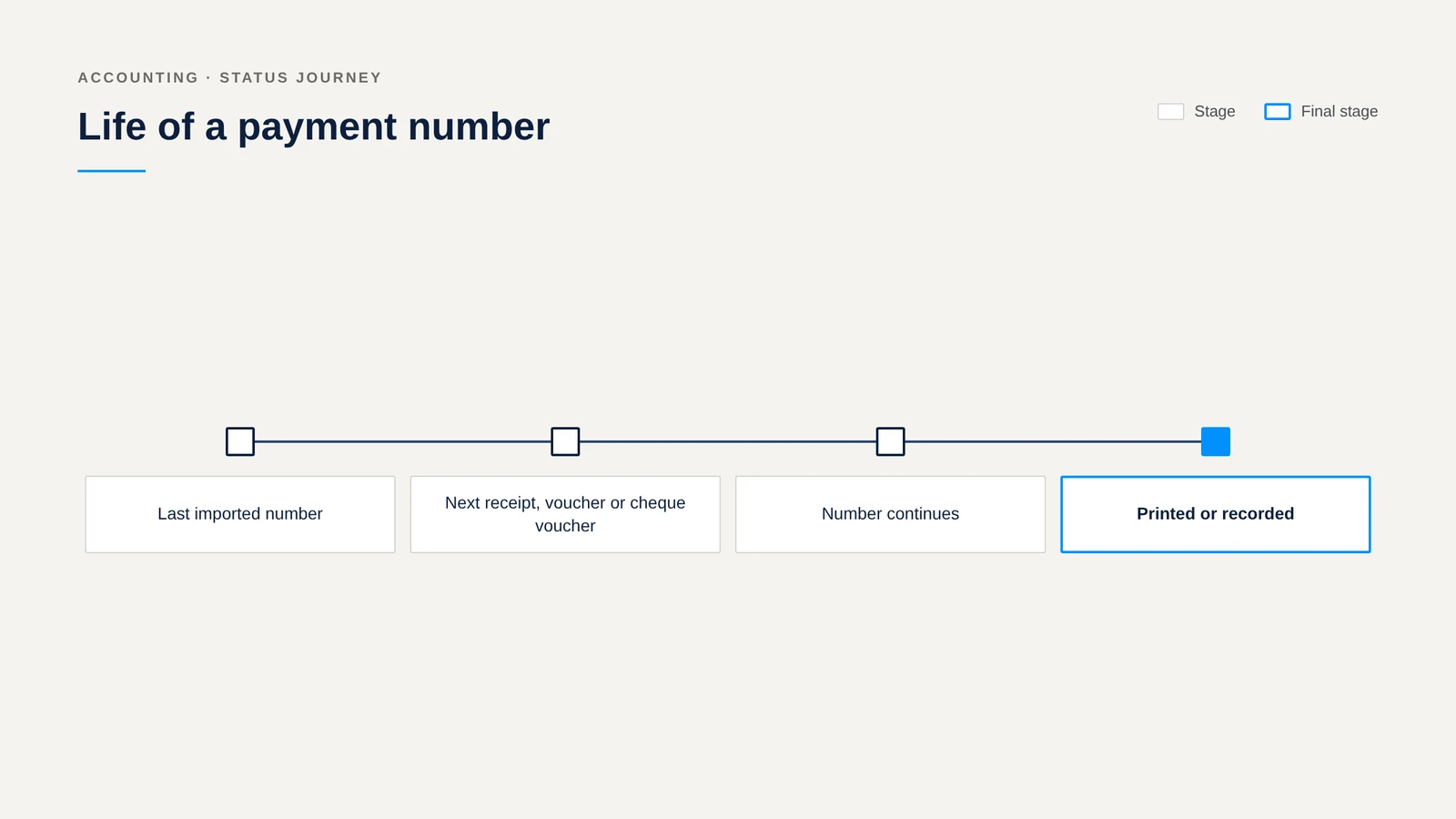
Document numbers must carry on. Receipts, payment vouchers and cheque vouchers each have their own series. New documents should continue from the last old number.
Payments are not always simple. One payment can settle a balance and also include a deposit, an excess amount or bank charges.
History must keep its matches. Balances alone are not enough. Invoices, bills and payments must arrive posted and matched to each other.
What we implemented
Reports the team already knows
We built a set of reports for sales and purchases by customer, item and representative, receivables and payables in summary and detail, and VAT registers. Sections open and close on screen. Sales representatives are kept as their own records, so they do not need an Odoo login. The trial balance shows the six-column form, and a detailed profit and loss comes with monthly, quarterly and year-on-year views.
Numbering, payments and the tax invoice
Receipts, vouchers and cheque vouchers each have their own number series, which continue from the highest imported number. A payment can carry extra lines for deposits and bank charges. The tax invoice is titled Tax Invoice, shows the amount in words in dirhams and fils, and carries editable bank and cheque instructions. It covers invoices, credit notes and bills.
A staged tool for moving the history
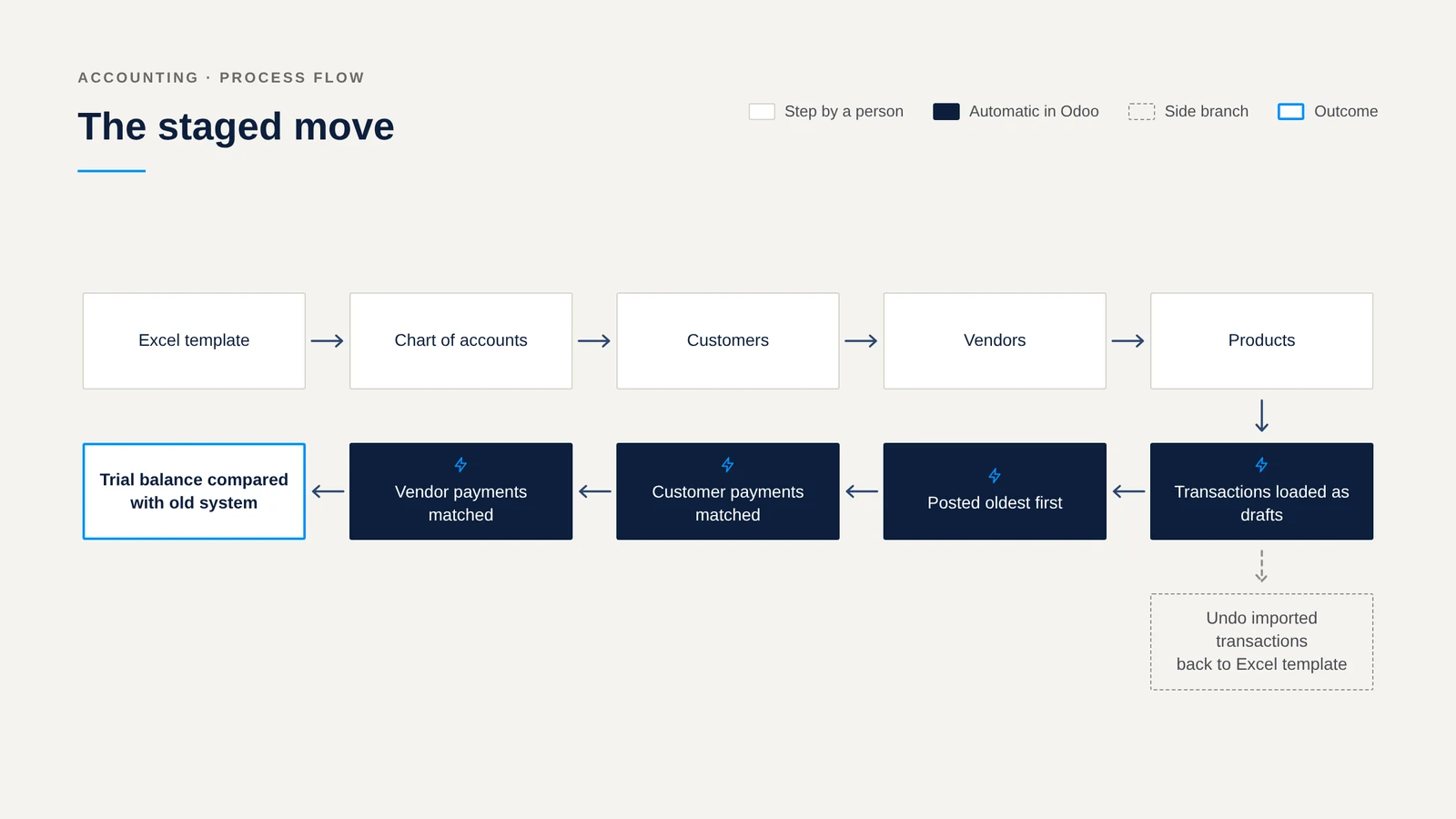
The tool starts from one Excel template and works in order. It brings in the chart of accounts, customers, vendors and products, then loads transactions as drafts and posts them oldest first. It then matches customer and vendor payments to what they paid. Last, a trial balance report lets the team compare against the old system. An undo step removes the imported transactions so a load can be redone. It is a one-off file load, not a live link.
How the work gets easier
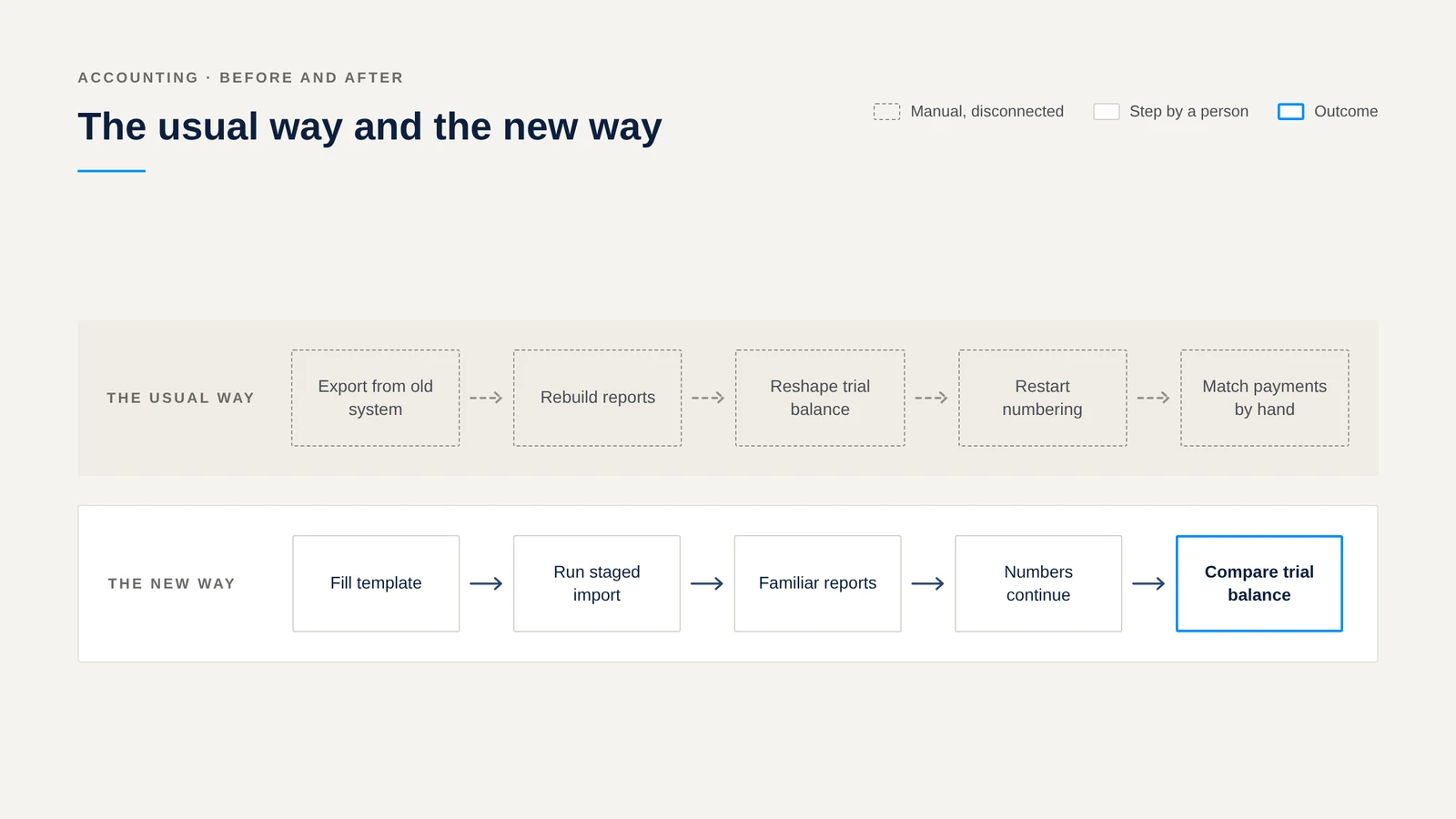
| The usual way | With the new process |
|---|---|
| Month-end reports are rebuilt in spreadsheets | The familiar reports are in Odoo |
| The trial balance has to be reshaped | It shows the six-column form directly |
| Number series restart after a move | Numbers carry on from the last one |
| Mixed payments need manual entries | Extra lines record deposits and charges |
| History is matched by hand after loading | The tool posts and matches payments |
| The old and new books are compared by eye | A trial balance report supports the comparison |
The result is a finance team that keeps its working habits while the books move. The team spends its time on checking and closing, not on rebuilding reports.
Related solutions
- Odoo Migration
- Odoo Accounting Customisation
- Odoo Custom Development