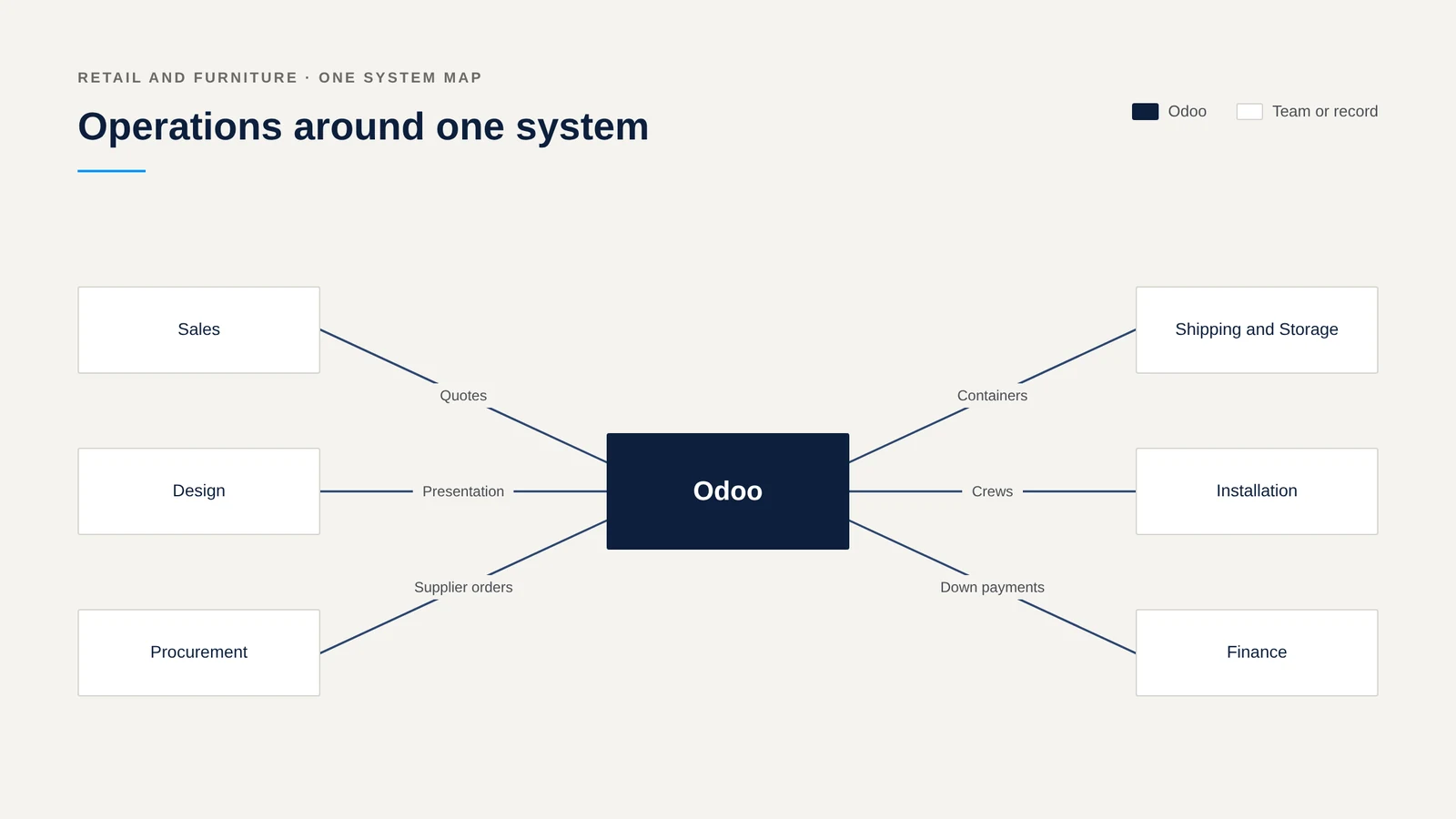
Obegi Home supplies luxury furniture, kitchens, wardrobes, curtains and wallpaper in the UAE. Most of it is made in Europe and installed in homes and developer projects. Al Jawad Software House built the operations side in Odoo, so a job can be followed from quotation through shipping and storage to installation.
The business
Obegi sells to private clients and to developers. A home is quoted as one job. A developer project covers many apartments in a few layouts. Goods arrive in containers, wait in storage and are fitted by crews.
Where the work gets hard
Quotes are priced in another currency. The dirham price starts from a supplier price in euros or dollars, then adds markup, discounts, delivery and installation. Quotes are revised, and changes after signing must not lose the original order.
Exchange rates need a watchful eye. A rate that differs from the company rate needs an approver.
Developer projects are costed by layout. Freight, duty and guarantees are shared across the apartments before a price can be given.
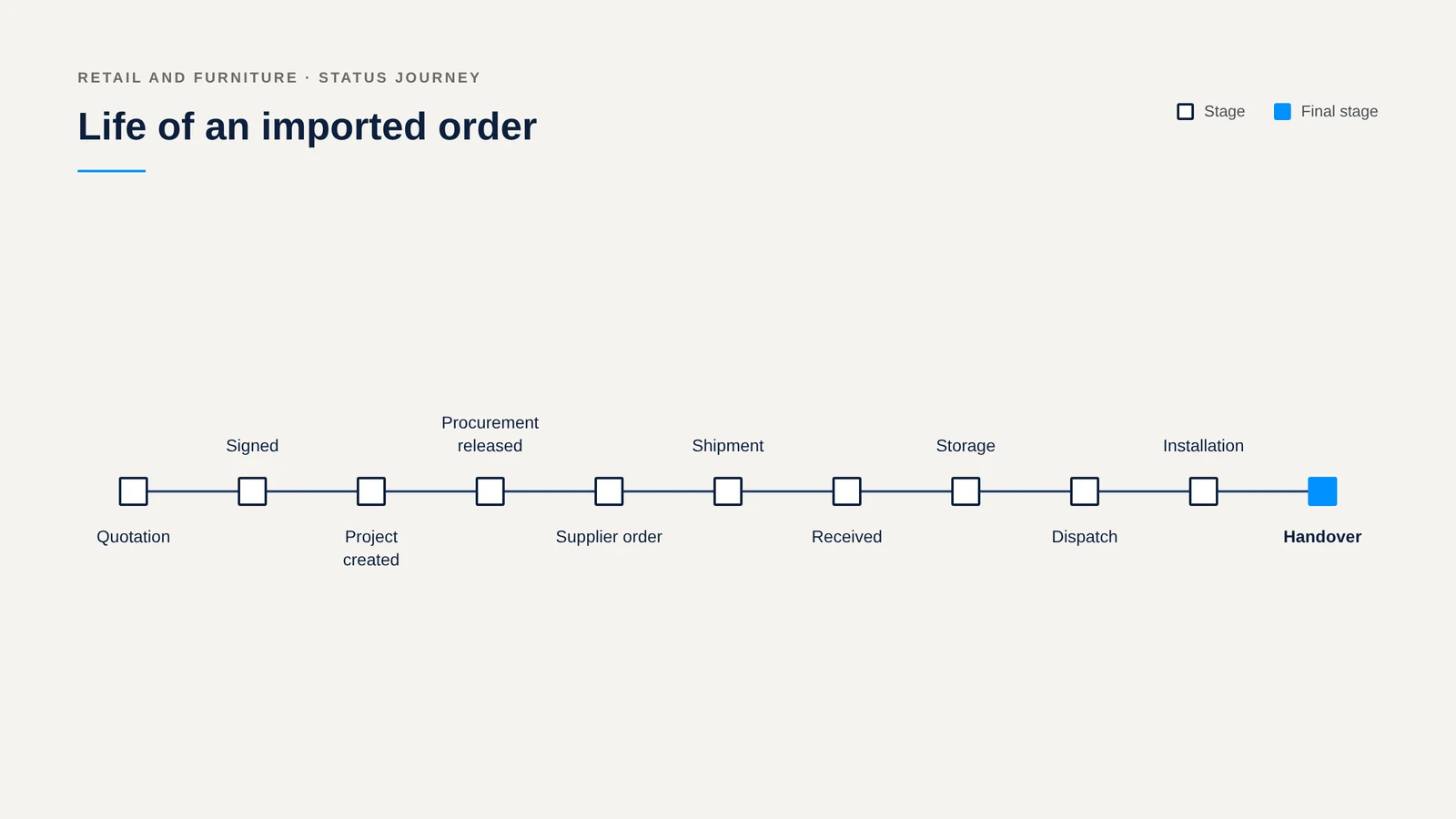
Imports move in stages. Each purchase line goes through production, shipping and arrival. Goods may wait in storage, and should not leave before the right people agree.
Installation takes planning. Crews work on working days, around time off, and snags and surveys need tracking.
What we implemented
Quotations that follow the supplier price
Odoo prices the quote from the foreign-currency cost and adds delivery and discount lines. A rate override goes to an approver. A quote can be revised into new versions, and changes after signing are handled as variations, so the original order is kept.
Developer project costing
Each layout has a base price, upgrades and a volume per unit. The assumptions cover exchange rate, freight, duty and guarantees. Each cost is shared across units on its own basis, such as a fixed amount, volume, container or a share of the price. The result becomes a quotation with one line per layout. Curtains and wallpaper are priced by length or roll coverage.
Procurement, shipping and storage
Once the client has signed and the down payment is invoiced, the project is created with its milestones. Procurement is released when the signed quotation is uploaded and the design presentation approved. Supplier orders are created per supplier and currency, and each line shows its stage. Shipments arrive as batches with their costs, and goods are received box by box. Storage charges start after a free period. Dispatch waits for procurement approval and for finance to confirm the client's balance, and a manager can override.
Installation planning
Installation plans use working days, skip Sundays and public holidays, and book crews around time off. Snags are tracked to closure, and the budget raises alerts as it is used up.
How the work gets easier
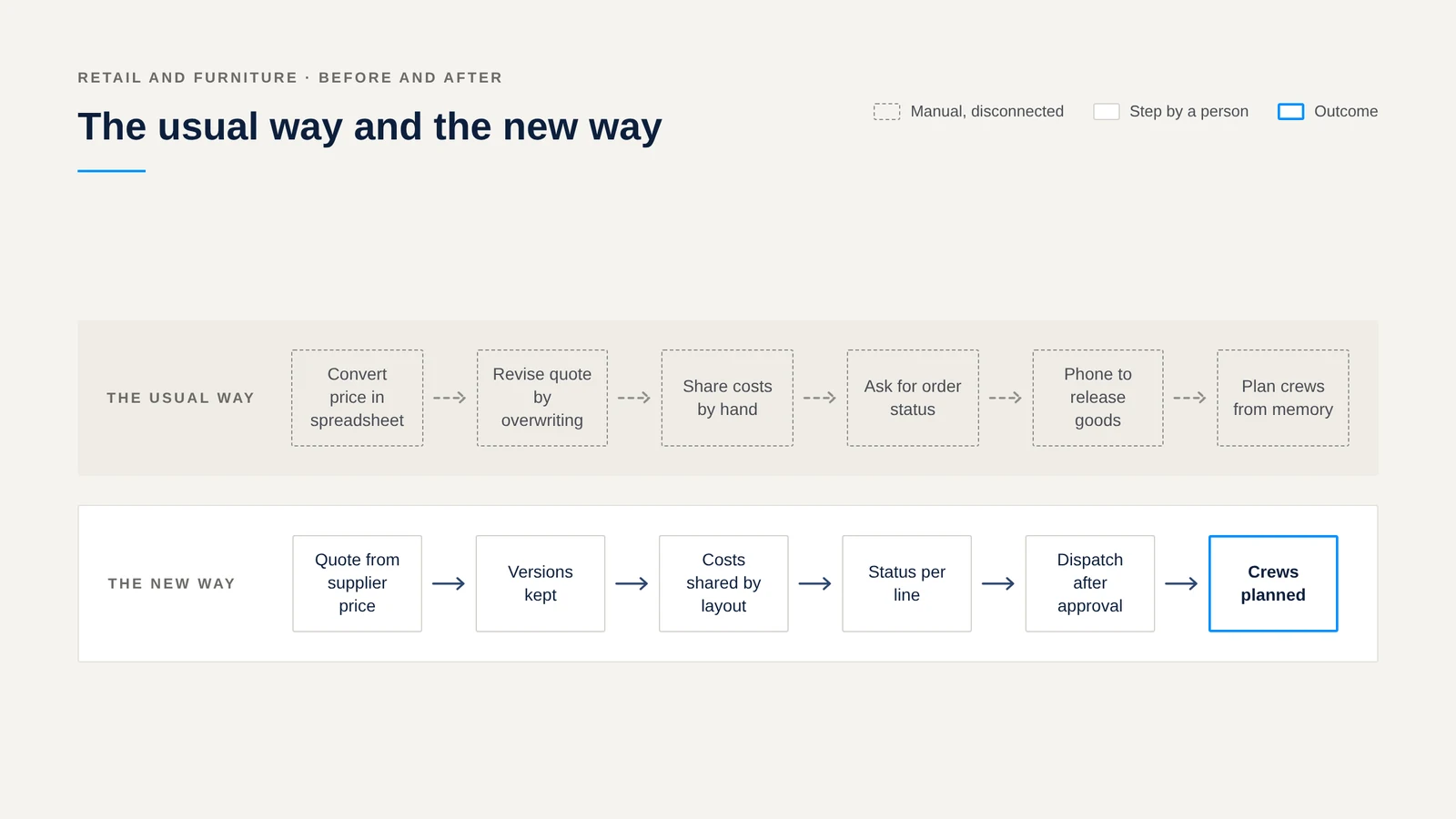
| The usual way | With the new process |
|---|---|
| Foreign prices are converted in a spreadsheet | The quote is built from the supplier price in Odoo |
| Revisions overwrite earlier quotes | Versions and variations are kept |
| Developer costs are shared out by hand | Costs are shared by layout on set bases |
| Order status is asked of the buyer | Each purchase line shows its stage |
| Goods leave storage on a phone call | Dispatch waits for the recorded approvals |
| Crew booking depends on memory | Plans respect working days and time off |
The result is one thread from the first quote to the last snag. People spend less time asking where things stand.