Al Maha sells coffee machines and coffee beans through shops and through salesmen who work from vans. Al Jawad Software House set up Odoo to keep both channels on the same stock, customers and cash records, and connected it to the van-sales platform the salesmen use.
The business
In a shop, the customer stands at the till. In the field, a salesman either takes an order for later delivery or sells straight from the stock on his van. Both draw on the same warehouse and end in the same accounts.
Where the work gets hard
Two systems, one set of records. Salesmen work in their own platform, while stock and accounts live in Odoo. Information has to travel both ways.
An order is only a promise if the stock is there. Goods promised to one customer must be held back from everyone else until they are loaded on the van.
Cash sits in a salesman's pocket. Money collected on the road needs an owner until it is deposited, and each payment must be tied to the right invoice.
Returns and cancellations go both ways. A cancelled order changes the warehouse. A refund changes the accounts. Each needs a clear rule about who may approve it.
What we implemented
One connection between Odoo and the van platform
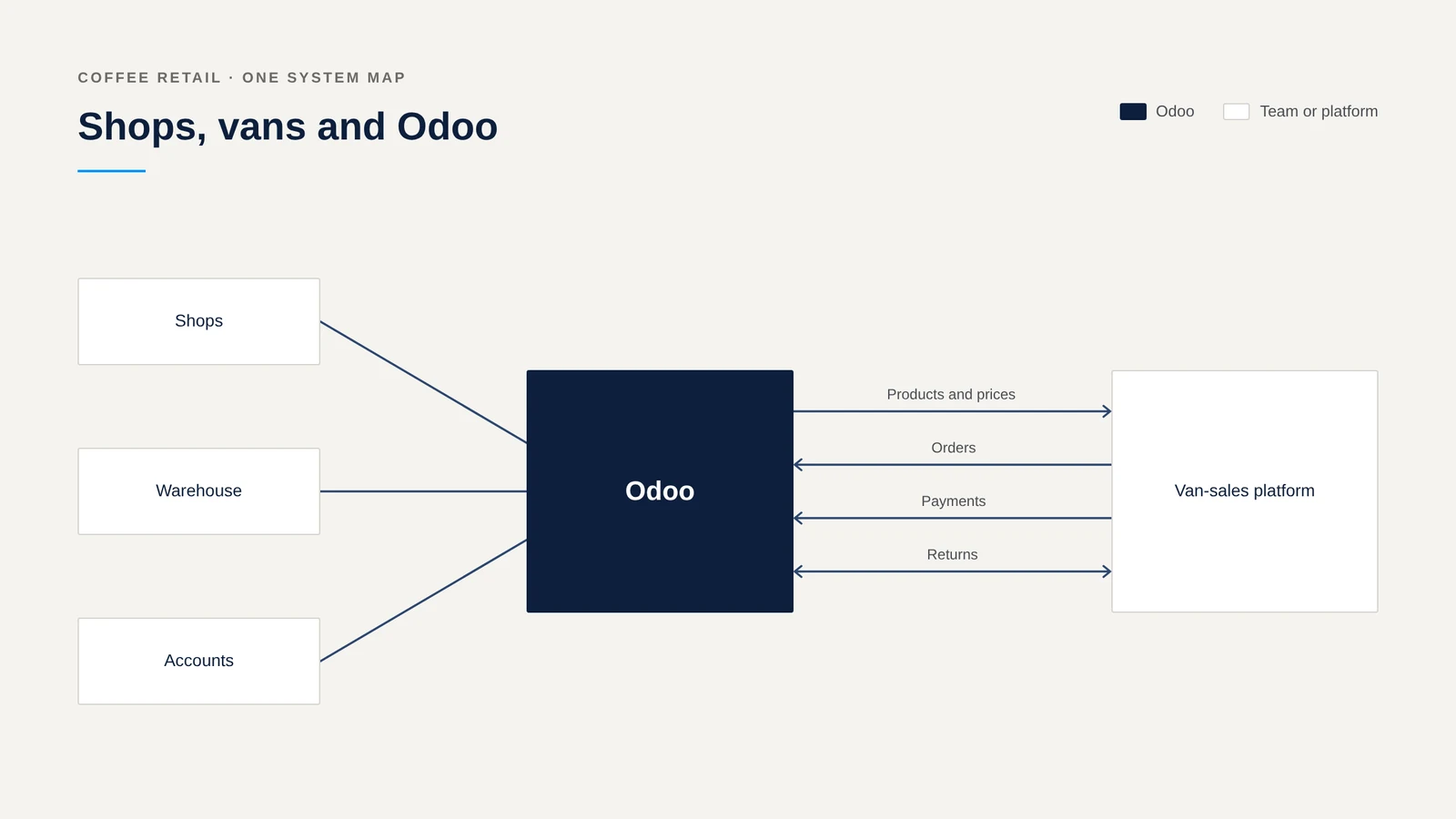
Each type of information has its own rule: which side owns it and which way it travels. Products, prices and customers go out to the field. Orders, invoices, payments and returns come back. Every exchange is logged, and a failed one is tried again. Messages to the platform leave only after Odoo has saved the record, so the field never hears about something that was undone.
Orders with stock behind them
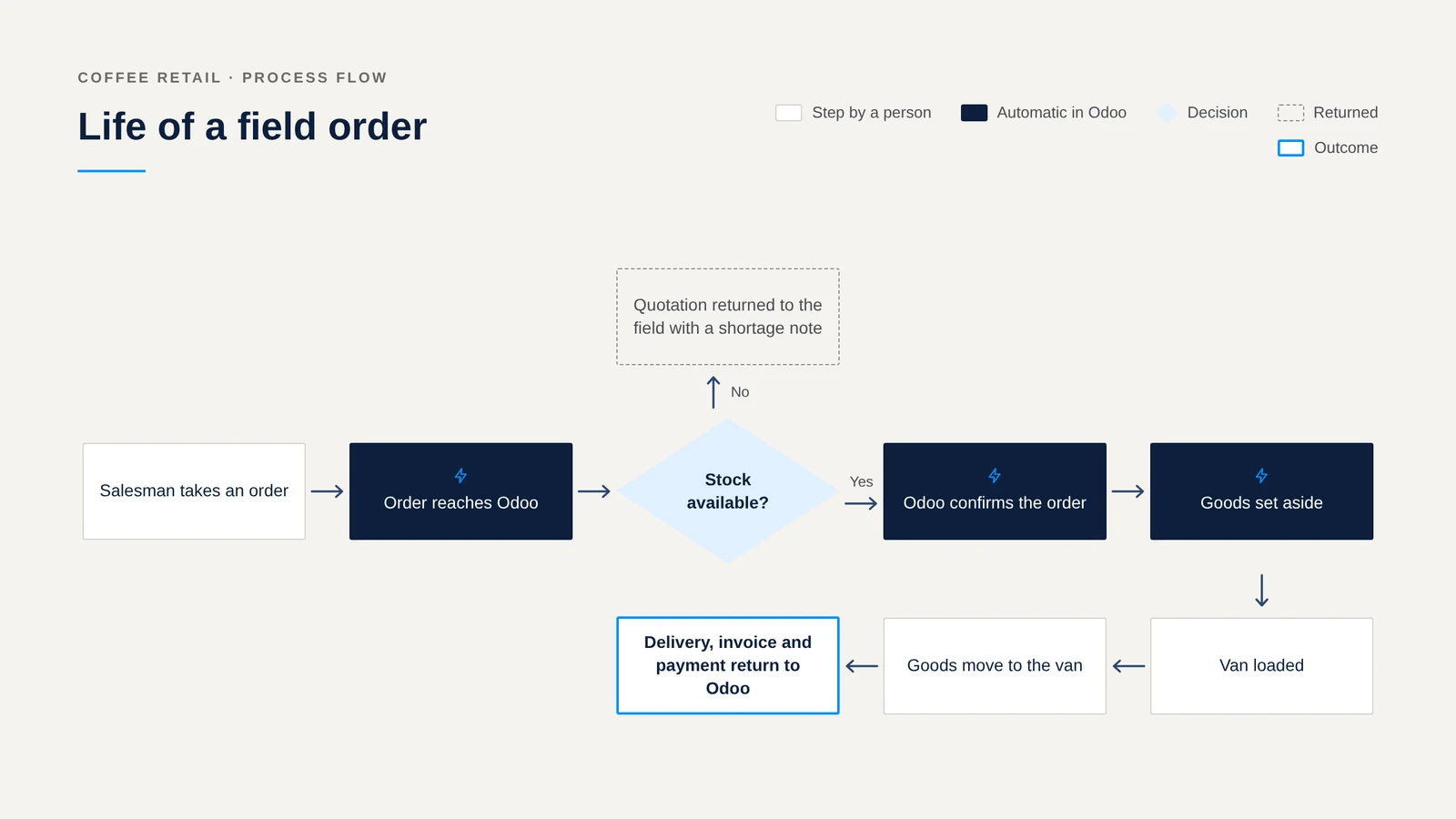
Odoo checks the warehouse for every field order. If something is missing, the order goes back as a quotation with a note listing what is short. Otherwise Odoo confirms it and sets the goods aside. When the van is loaded, they move to the van in their own lots.
Cash that stays accounted for
Field payments are recorded against the salesman. When he deposits the money, it moves to the company's cash box. Odoo refuses to match a payment to another customer's invoice.
Returns, cancellations and the till
A cancelled order puts reserved goods back in stock, or brings delivered goods back to the driver. Returns from a van sale link to the original order lines.
In the shops, only named employees can refund, discount or change a price list. For a refund, an authorised employee signs in at the till, which then returns to the cashier. Transfers between warehouses need approval by named people.
How the work gets easier
| The usual way | With the new process |
|---|---|
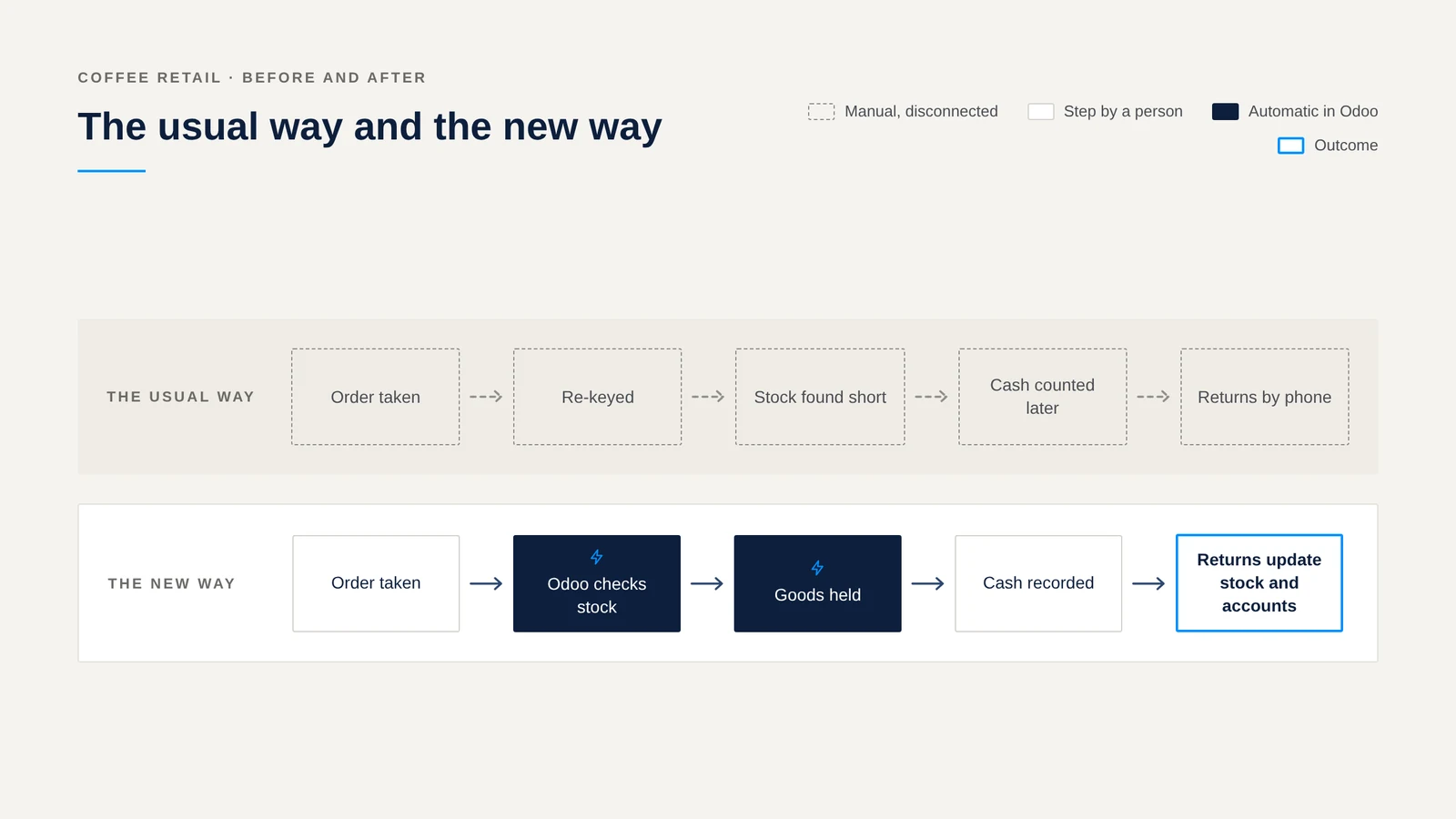
| Field orders are re-keyed into the main system | Orders arrive in Odoo from the van platform |
| Stock is promised without checking the warehouse | Odoo checks stock first and returns a shortage note |
| Cash is counted at the end of the day | Each payment is recorded against the salesman until he deposits it |
| Returns are handled by phone call | Returns and cancellations update stock and accounts together |
| Anyone at the till can give a discount | Only named employees can refund, discount or change prices |
The result is one picture of stock and cash across shops and vans, and less time spent reconciling two systems.
Related solutions
- Odoo Integration
- Odoo Custom Development
- Odoo Point of Sale