BabyFit sells baby jewellery in Saudi Arabia and the United Arab Emirates, through several companies in a shared Odoo database. Al Jawad Software House set up Odoo to keep an online marketplace up to date and to move stock between the companies cleanly.
Where the work gets hard
A marketplace wants its own files. It expects product and stock lists in its own layout, and they must match what is on the shelf.
Stock moves between legal companies. Goods that leave one company and arrive in another change hands on the books, even when they never leave the building.
What we implemented
Automatic marketplace updates
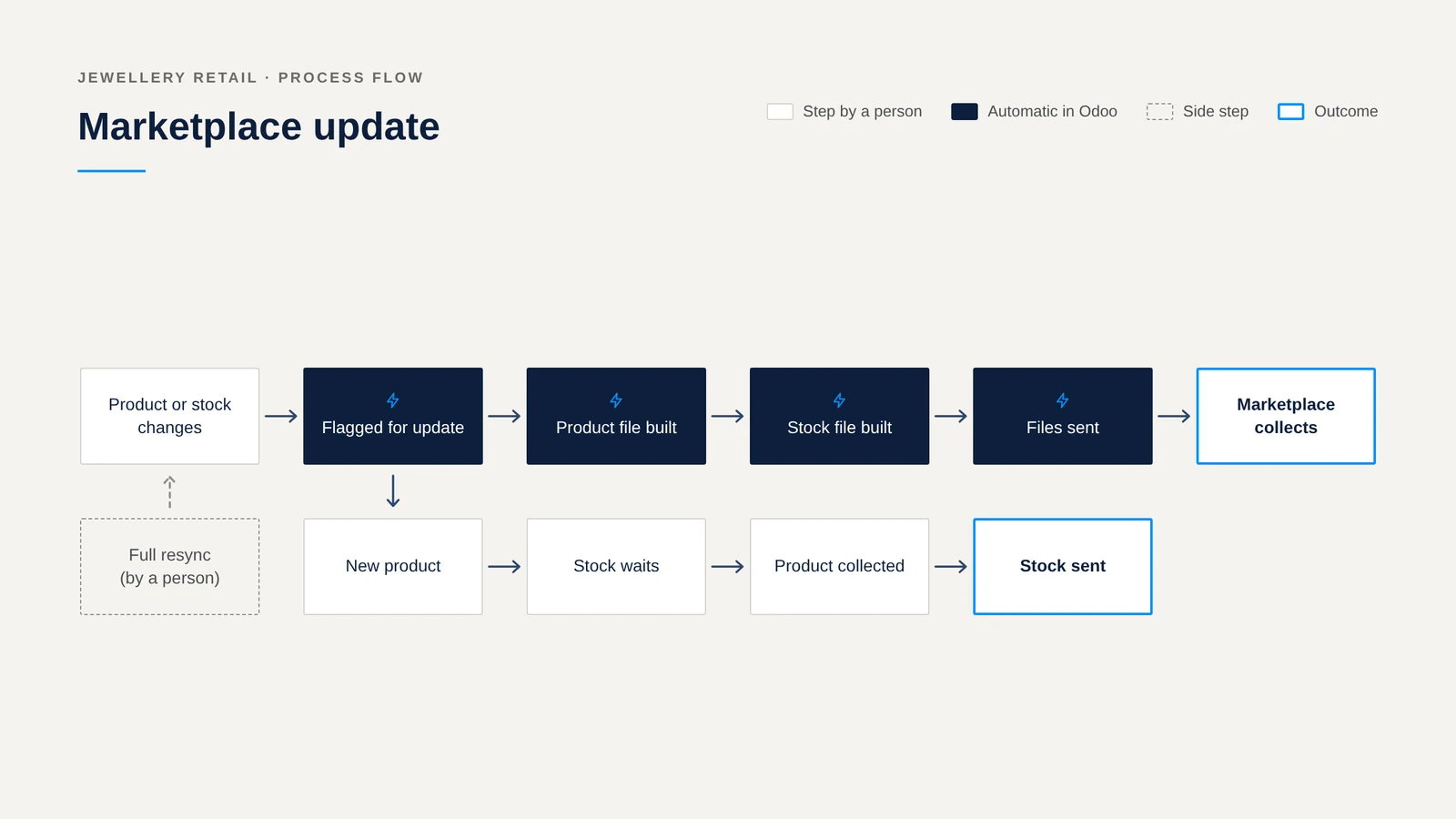
When a product, a variant, its price or its stock changes in a marketplace location, Odoo flags it. On a regular schedule it builds the product and stock files in the marketplace's layout and sends them. A file is only picked up once it is complete. Stock for a new product waits until the marketplace has collected the product itself. Every run is logged and a full resync can be forced.
Stock transfers between companies
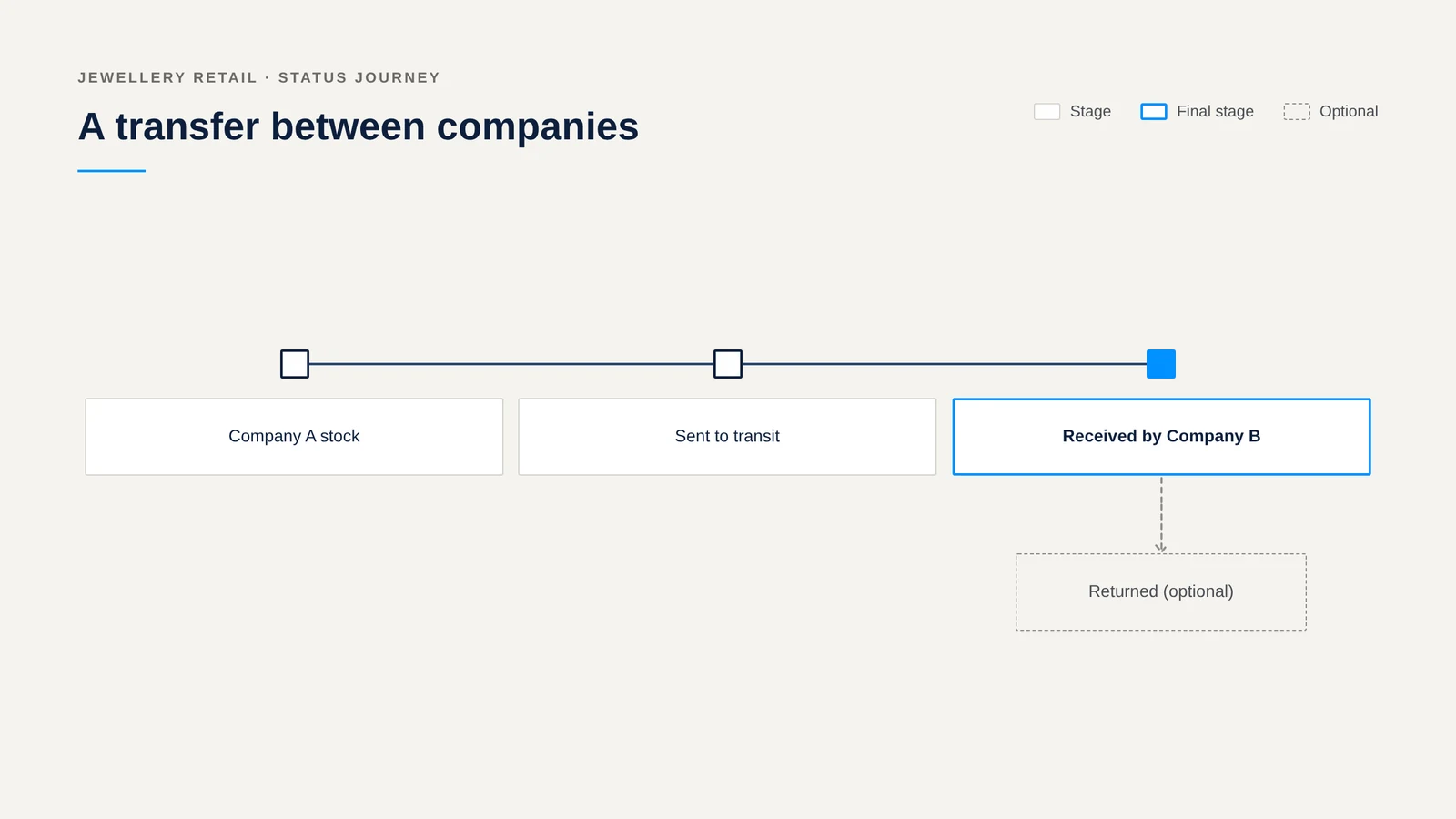
A transfer is sent into a transit location and then received by the other company. The accounting follows the stock, lots are recreated in the receiving company, and sent or received transfers can be returned.
Product and label tools
A wizard moves products to the right company in bulk and reports what worked and what failed. An Excel sheet of lots becomes printable labels.
How the work gets easier
| The usual way | With the new process |
|---|---|
| Someone prepares marketplace files by hand | Odoo prepares and sends them |
| Inter-company moves are fixed up on the books afterwards | The transfer carries the accounting with it |
| Labels are typed one by one | Labels come from a sheet of lots |
The marketplace stays close to real stock, and the team handles exceptions instead of routine uploads.