This trader buys building materials on bank-backed supplier credit, and the goods usually go straight from the supplier to the customer. Al Jawad Software House set up Odoo so that credit limits are checked when an order is placed and transport is priced by route.
The business
Dropship means the trader never holds the stock. The supplier delivers to the customer, and an outside transporter moves the goods. Purchases are funded under bank facilities such as letters of credit, which promise payment to a supplier, and letters of guarantee. Each facility has a limit, so every new order uses up part of it.
Where the work gets hard
Limits must mean something. Finance needs to know how much of each facility is already used before the next order is confirmed.
Transport costs vary by route. A transporter's charge depends on where goods start and finish, plus tolls and extras. A delivery with no agreed price can slip through.
Prices need a second pair of eyes. A price that takes effect the moment it is saved can reach a customer before finance has agreed it.
Cheques and cash. Customers pay by post-dated cheque, and owners want to see profit and cash coming up, not only what has been invoiced.
What we implemented
Facility limits checked at the purchase order
Each bank facility holds its limits, with supplier facilities beneath it. Odoo counts goods delivered but not yet invoiced, unpaid supplier bills and confirmed orders not yet received, and adds the new order. If that passes the limit and the agreed tolerance, the order is blocked, or only warned, depending on the setting. Payments are spread across facilities, and an open-shipments report shows what is outstanding.
Transport priced by route
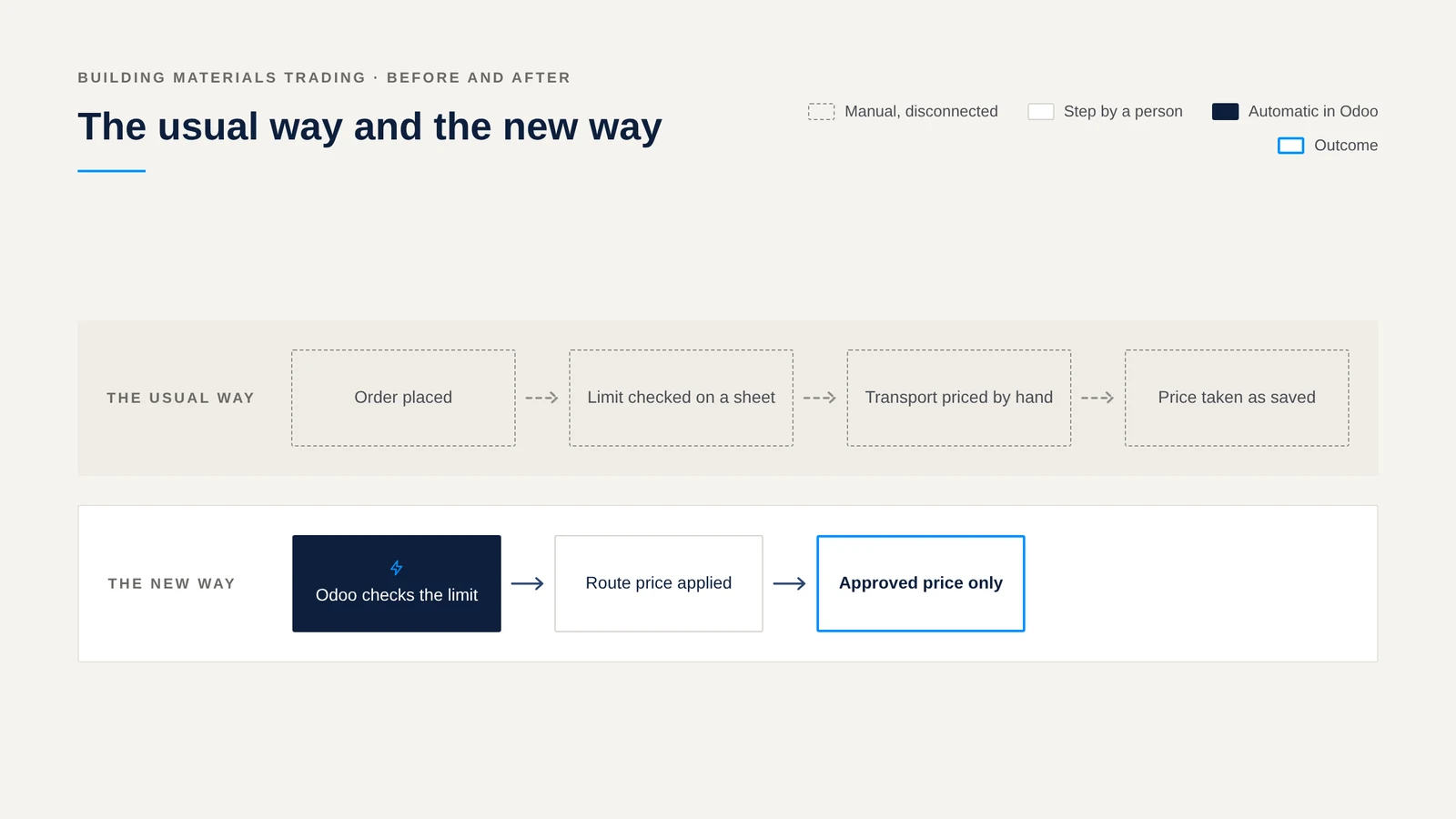
Prices are held per transporter, supplier and route, with tolls and extra charges alongside. A delivery that needs a transporter cannot be validated until its route has a price. A delivery that mixes goods needing a transporter with other goods is split automatically.
Prices approved before use
New price items start as drafts, and any change sends an item back to draft. Only approved items apply on a quotation, and only finance managers can approve.
Cheques and the owners' view
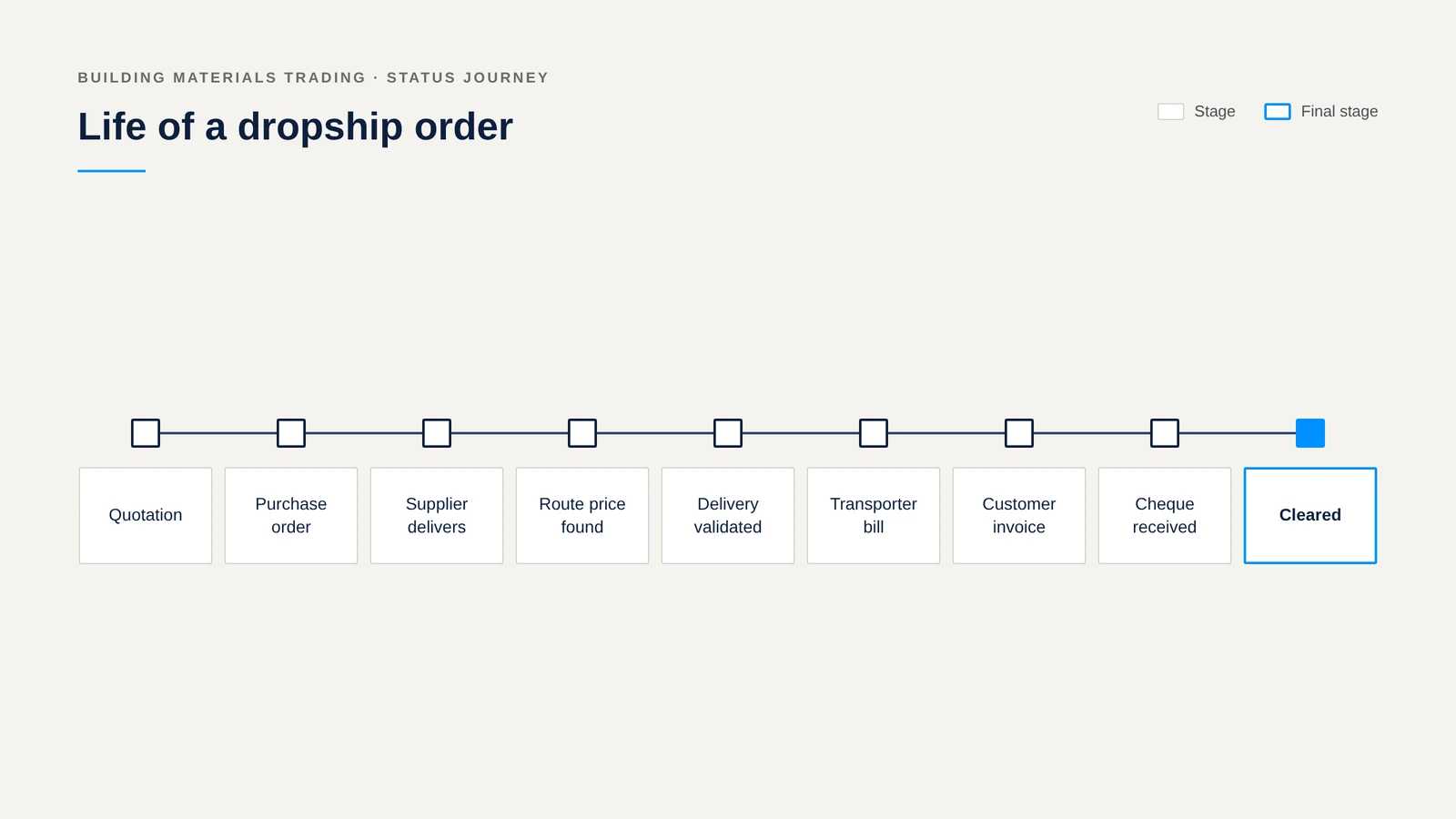
Cheques move from draft to cleared or bounced, with accounting entries along the way, and print on the layouts of four UAE banks. An owners' report shows revenue, material cost and transport cost on a delivered basis and an invoiced basis. A cash-flow forecast covers receivables, payables, cheques and letter-of-credit liabilities.
Access by role
Menus and buttons are limited by role, so each person sees what their job needs.
How the work gets easier
| The usual way | With the new process |
|---|---|
| Facility use is worked out on a spreadsheet | Odoo shows exposure per facility |
| Orders are confirmed and limits checked afterwards | The check happens when the order is confirmed |
| Transport cost is entered per delivery | Route prices are applied from one place |
| Prices go live when saved | Only finance-approved prices appear on quotations |
| Profit on undelivered goods is estimated | The owners' report shows delivered and invoiced views |
The result is purchasing that stays inside its credit, and a clearer picture of cost and cash. Finance reviews exceptions rather than rebuilding the numbers.
Related solutions
- Odoo Custom Development
- Odoo Purchase
- Odoo Accounting
- Business Process Automation