A fashion retailer sells through its Odoo website and shops. Al Jawad Software House built the pieces that publish its catalogue in a standard shopping format, send shoppers into a filled cart, and make promo codes behave sensibly next to markdowns.
Where the work gets hard
Fashion lives in variants. Every size and colour is its own item, with its own price and availability.
Links must not break. A shopper who clicks a product link expects a working cart, not an error.
What we implemented
A product feed by variant
A public feed lists each variant with a group identifier, the price worked out for the website's price list and currency, and its availability. Items with no price are skipped. The feed is stored and rebuilt regularly, so shoppers and sales channels read a finished file.
A prefilled cart
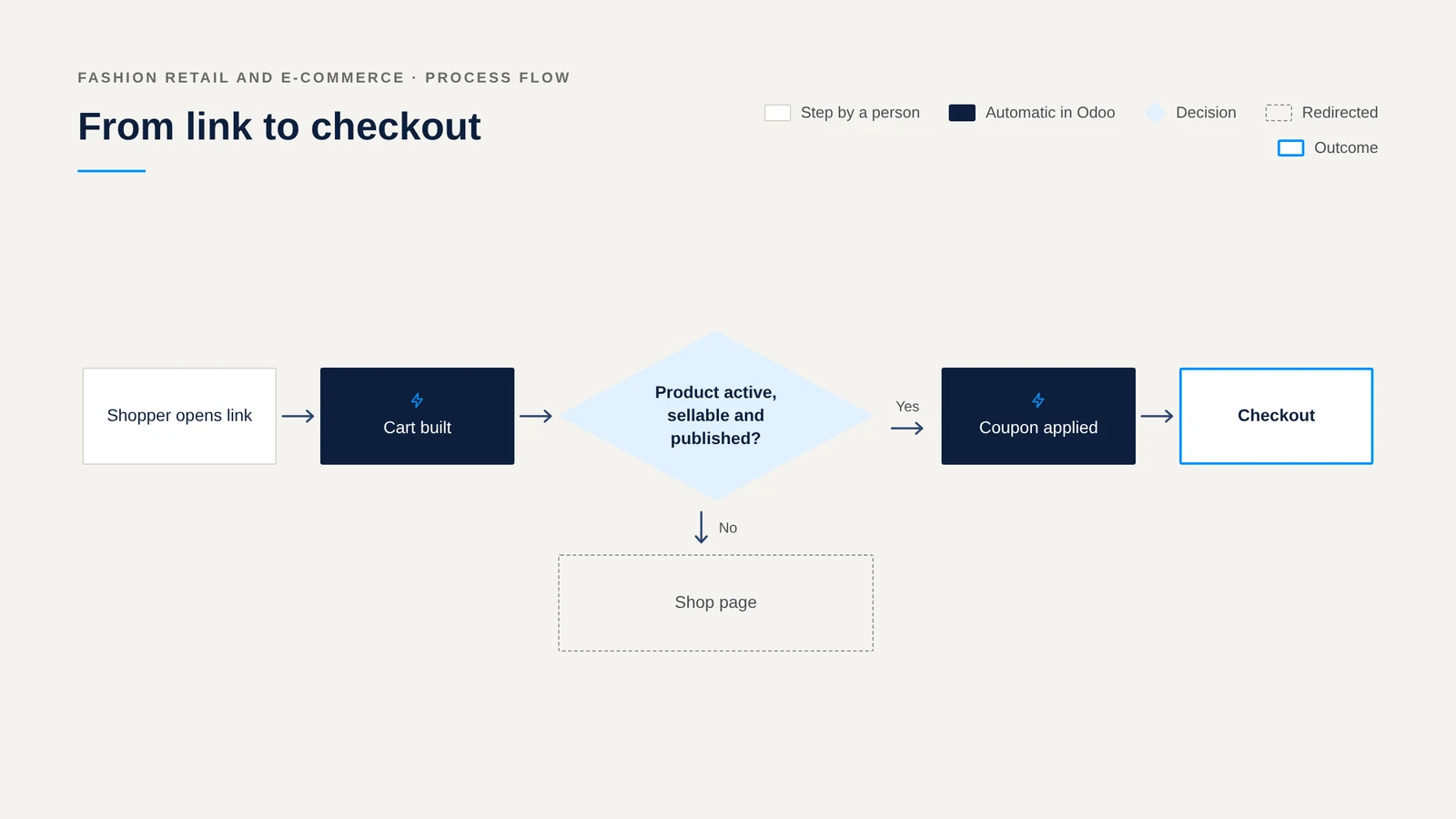
A link carries the products and a coupon. Odoo builds a clean cart, checks that each product is active, sellable and published, applies the coupon and opens checkout. If something is wrong, the shopper lands in the shop instead.
Promo codes on the regular price
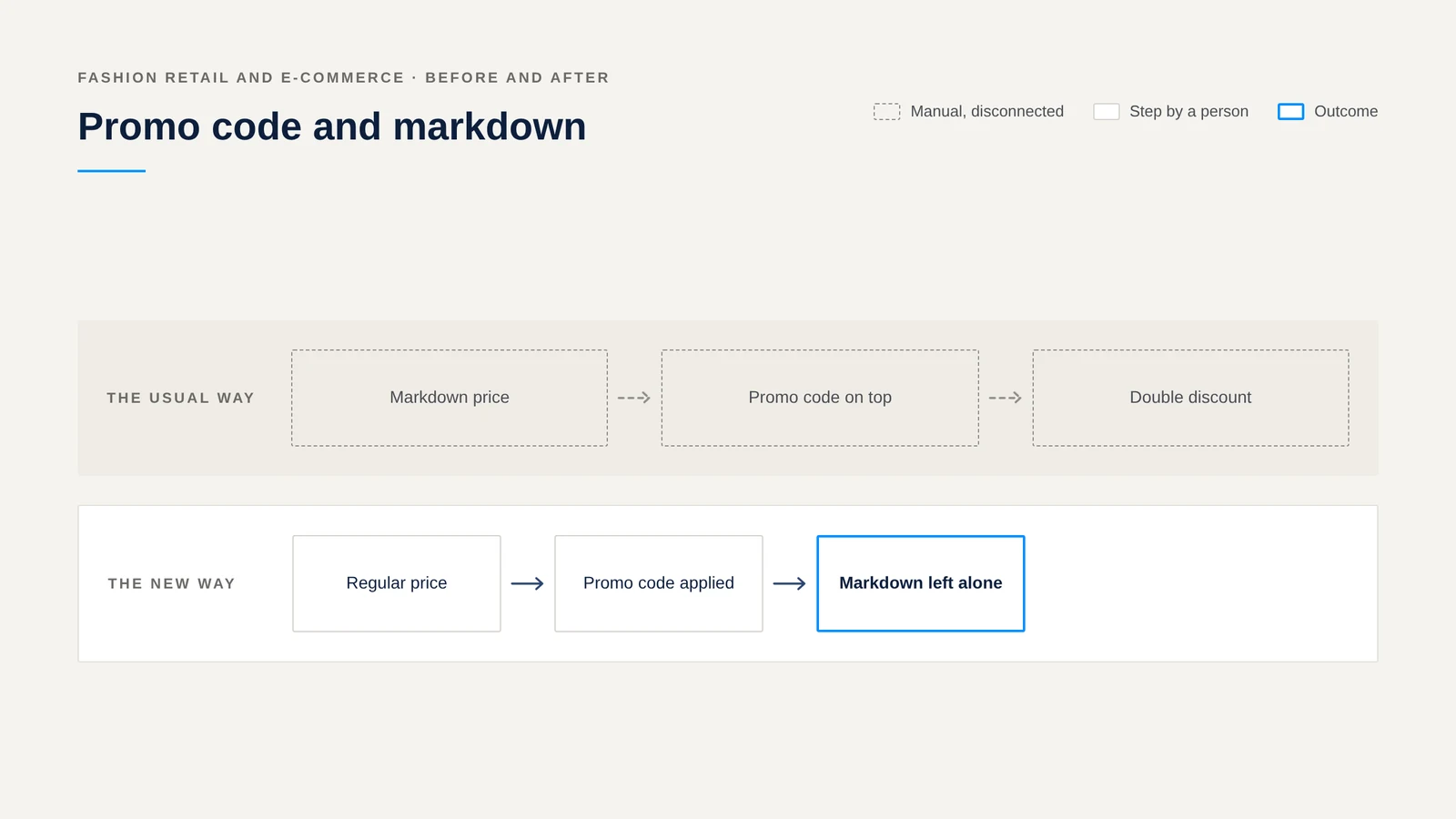
Each loyalty program can calculate its discount from the list price rather than the marked-down price, so a code never stacks on a markdown.
Catalogue and owner reporting
Barcodes carry a check digit, references follow the product category, and a sales report by product owner covers website and shop sales.
How the work gets easier
| The usual way | With the new process |
|---|---|
| Catalogue files are exported and fixed by hand | The feed rebuilds itself |
| A bad product link breaks the cart | Odoo checks each product and falls back to the shop |
| Discounts are worked out case by case | The program decides which price to use |
The team manages the catalogue once and lets the feed and checkout follow.