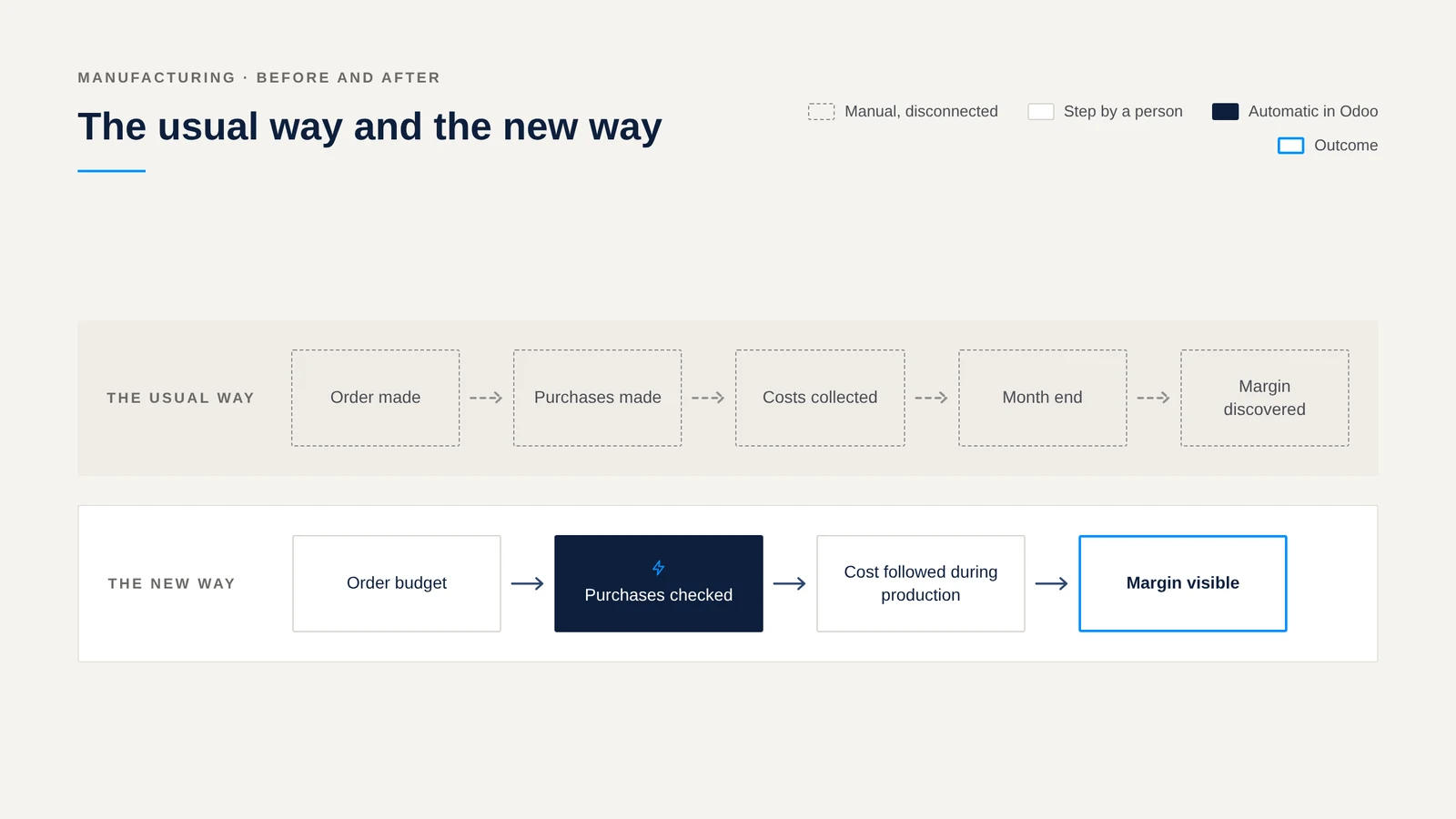
When a product is built to a customer's order, a margin figure at month end comes too late to change anything. ARCA Technologies, a UAE manufacturer of electronic and mechanical products, needs to know how each order is doing while it is still open. Al Jawad Software House shaped Odoo around that question, so each order has its own budget, and its cost can be followed through purchasing, the shop floor and the accounts.
The business
ARCA builds to customer order. A product can combine programmed boards with aluminium, steel and copper parts, and the work passes through production lines and work stations. Each order has to be watched on its own.
Where the work gets hard
The cost of an order has many parts. A job draws on materials, labour, station time, scrap, rework and direct expenses. Rework means correcting a piece that failed inspection. Purchasing needs to know where an order stands before it commits more money.
Spending passes through many hands. Purchase requests, supplier quotations, purchase orders and payments each need their own sign-off. A change to an approved order should restart that sign-off, and a purchase that would overrun the budget needs a reason and a decision.
The line matters as much as the job. Manufacturing software usually follows orders. The shop floor also thinks in production lines: who is on the line today, how much has been made, and what stopped it.
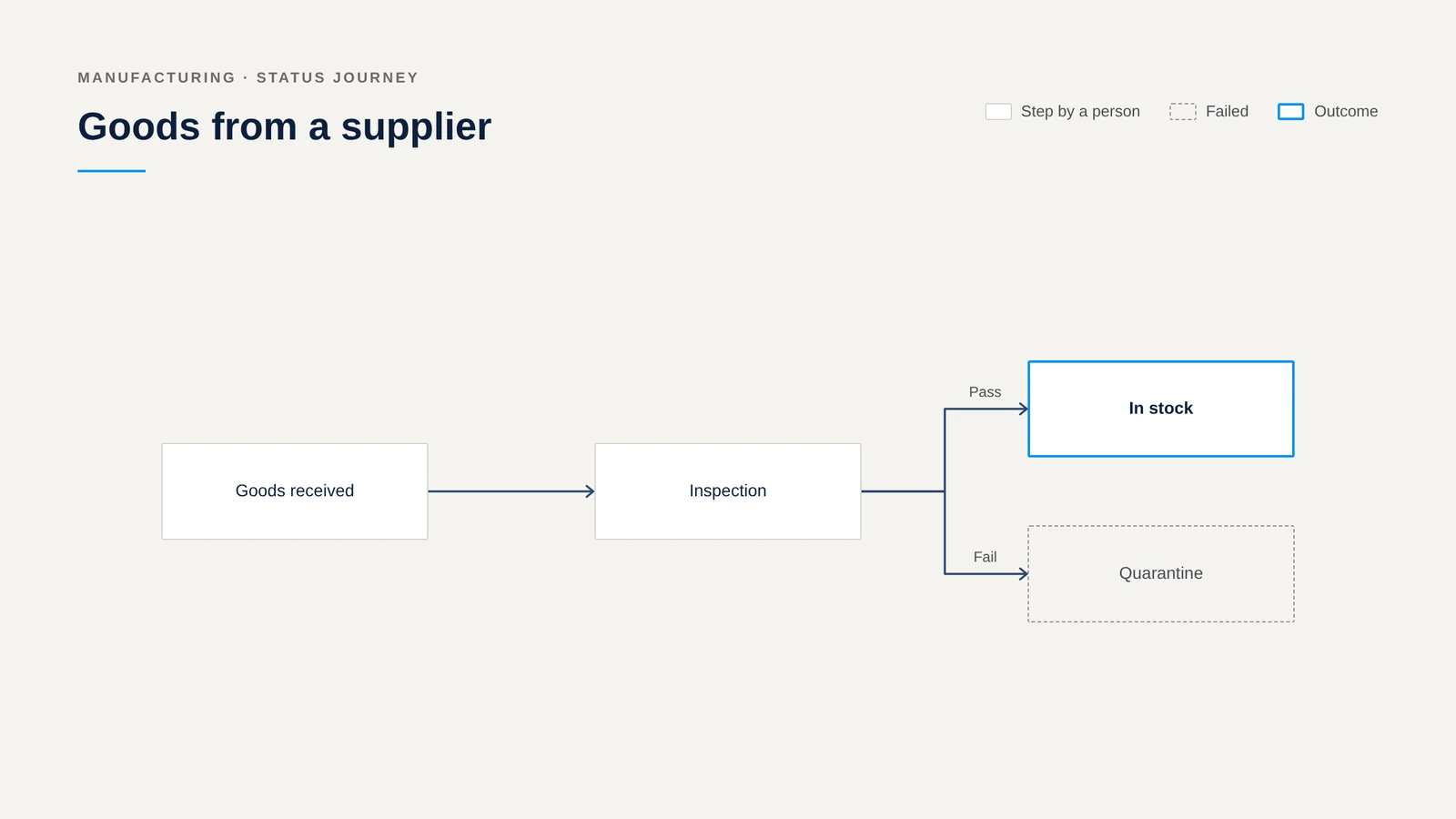
Defects must stop before stock. Goods from suppliers should pass inspection before they can be used. A scrapped piece has to be remade without losing its link to the original order.
Services have no goods receipt. Their cost needs a controlled way into the accounts.
What we implemented
A budget for every customer order
Each bill of materials, the recipe of parts and work behind a product, carries a budget by cost category. When a sales order is confirmed, it receives an order budget built from those recipes. Finance approves it, and revised versions keep their history.
Odoo compares actual cost plus open commitments with the approved budget, and shows the position in colour bands. Purchase requests and purchase orders are checked against it. A purchase that would overrun needs a written reason and a finance exception before it goes further. One view for each order shows budget, actual cost, commitments, expected margin and collections.
Cost of sales in ARCA's own terms
Cost of goods sold is what the accounts record as the cost of what was sold. For a manufactured product it would normally be a single line. We split it, so each raw material, labour and station overhead goes to its own account, based on the actual cost of the manufacturing orders that made the product.
A shop floor run by production lines
Team leaders have a dashboard to start, pause, resume and finish work, assign people for the day, and record quantities at checkpoints. If split orders compete for the same line, Odoo raises a warning. Each sales order line can be set to manufacture or buy, and planners read a single timeline from purchase request through to delivery.
Quality gates and rework
Supplier goods get a pass or fail before entering stock, and failed goods wait in quarantine. During production, every rejection needs a photo of the defect. What quality sends back becomes a rework order for the line that made it. Scrapped pieces are remade through a replacement manufacturing order, which raises purchase requests for any missing components. Invoicing waits until delivery has been validated.
Approvals and service acceptance
Purchase orders follow a multi-stage approval, and any change to the content resets it. Controlled items can only be bought from approved suppliers. Payments have their own approval before posting. For services, a Work Acceptance is the sign-off that the service was received. It goes through its own approval, records the cost before the supplier's bill arrives, and takes advance payments into account.
HR, petty cash and management views
A UAE HR suite covers gratuity, pension, leave and loans. Petty cash runs on vouchers with approvals, and executives have dashboards suited to their roles.
How the work gets easier
| The usual way | With the new process |
|---|---|
| Margin on an order is worked out after the job is finished | Budget, actual cost and commitments are visible while the order is open |
| A buyer finds out about an overrun too late | The purchase is checked against the order budget first |
| Cost of sales appears as one figure | Materials, labour and overheads each reach their own account |
| Suspect goods can slip into stock | Goods stay out of stock until they pass |
| Scrap is reordered informally and loses its link to the job | A replacement order stays tied to the original flow |
The result is a manufacturer that can act on an order's cost while there is still time to act. Purchasing, production, quality and finance all read from the same picture of each order.