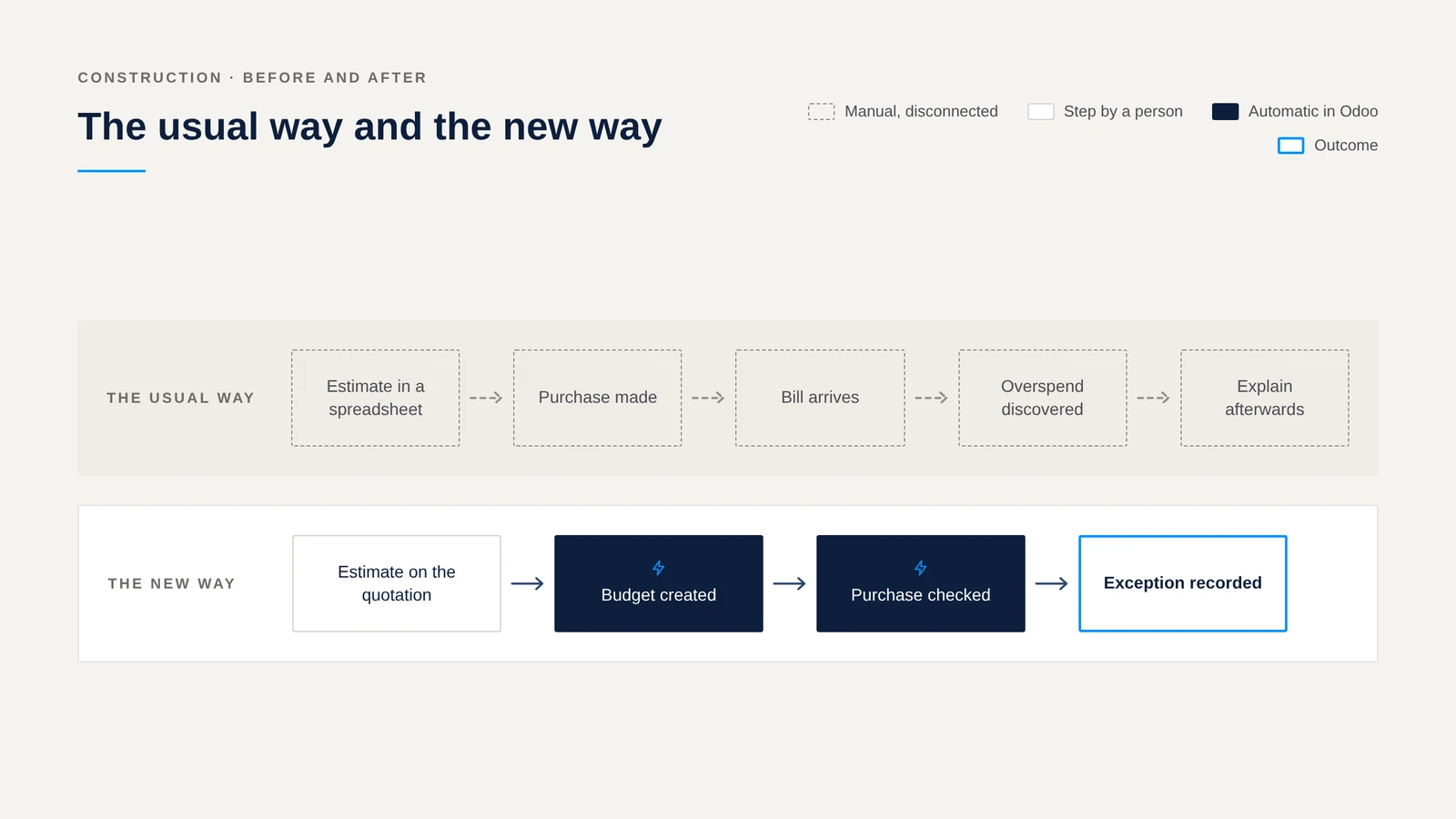
In coating and insulation contracting, the price is set by area, coats and wastage. The margin is then won or lost in purchasing. Al Itqan Coating & Insulation Materials works on waterproofing, grouts, coatings and insulation in the UAE, as a subcontractor and materials supplier. Al Jawad Software House built a cost-control process in Odoo that carries each estimate into a project budget, checks purchase orders against it, and bills the work the way main contractors expect.
The business
Al Itqan shares its system with a sister trading company that works very differently, on stock and standard sales. Both need one place to work, without the rules of one getting in the way of the other.
Where the work gets hard
A coating price has layers. A job is priced from an area, the number of coats, coverage per square metre, wastage, material and labour rates, overheads and profit. A plain sales line holds none of this.
Cost control has to act at the point of commitment. Once a purchase order goes out, the money is promised. The comparison with the budget is useful before that moment, not after the bill arrives.
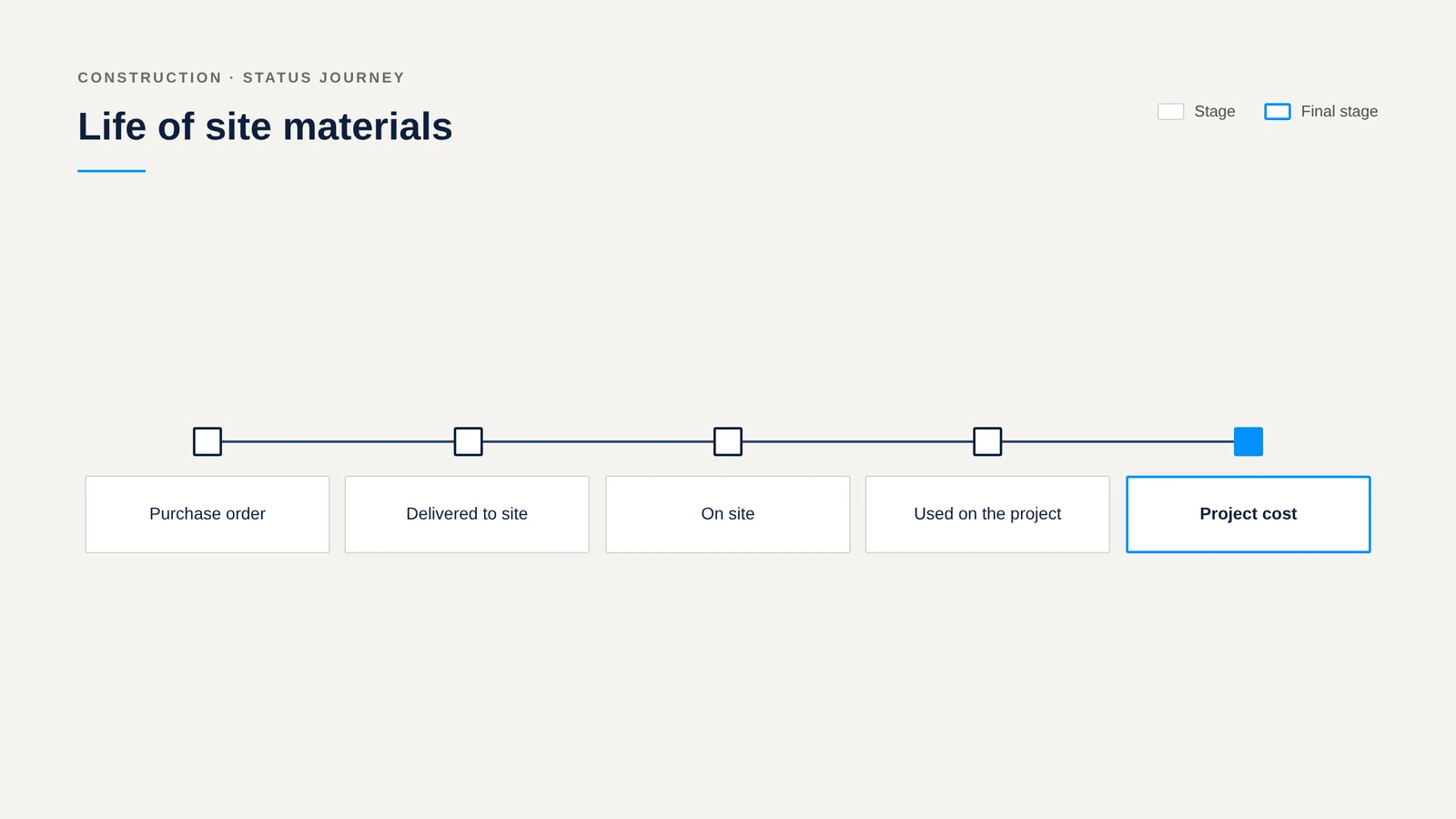
Site materials are neither stock nor spent. Project materials often go straight to site without passing through the warehouse. They still have a value until they are used, and the accounts need to show it.
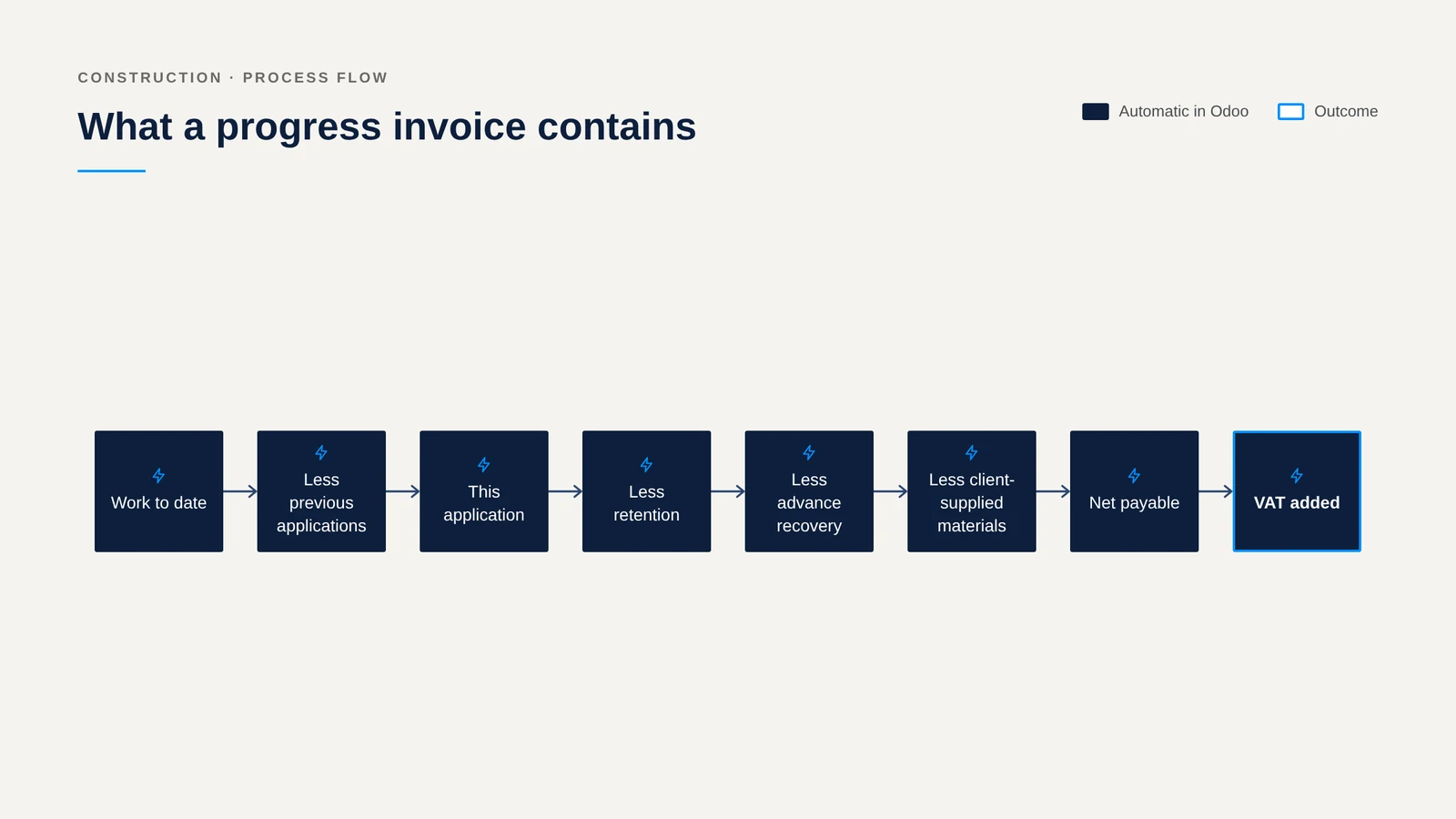
Subcontract billing has its own arithmetic. A progress application is a claim for the work done so far. Retention, the share the client holds back until later, is withheld and released by milestone. Advance payments are recovered step by step. Materials supplied by the main contractor are deducted, and VAT falls on the net amount payable.
What we implemented
Estimates on the quotation
Each quotation line can carry a structured estimate, with coverage, coats, wastage, material cost, labour and tools, overheads and profit. The quoted price and how it was built sit together on the order. One supplier is chosen for each material.
A project budget that acts on purchasing
Once materials are priced, the estimate seeds a project budget by category: Material, Subcontract, Labour, Equipment and Tools, Site Overheads, and Other. The budget goes through approval, can be revised, and is closed at the end of the job.
Each budget line shows what was Budgeted, what is Committed on open purchase orders, what is Actual on posted bills, and what Remains. When a purchase order would break a category, Odoo either blocks it or warns, depending on company policy, and shows where the overspend sits. A manager can override a block only by giving a reason, and the override is recorded on both the purchase order and the budget.
Material requests that know the budget and the stock
The project team raises a material request, seeded from the estimate. Each line shows the remaining budget for its category and flags any excess. Lines are split into items that can come from stock, which raises an internal transfer, and items to buy, which go through a purchase order capped by the budget.
Site material accounting
A delivery to site records the materials as held on site and received but not yet billed. When materials are used, the cost goes to the project at its average cost. Site counts and differences in the supplier's price have their own entries. A site report shows opening, received, transferred, used, adjusted and closing balances, in Excel or PDF.
Progress billing for subcontractors
Progress invoices follow the To Date, Previous and This Application layout that main contractors expect. Retention is withheld on each invoice and released through a retention invoice split by milestone. Down payments are recovered from the first invoice onward. Client-supplied materials appear as deductions, and UAE proforma and tax invoices show VAT on the net payable.
Contracting and trading on one system
Construction behaviour is switched on by company, so the trading company carries on with standard Odoo. Approvals are set by company. Contacts and products can be shared between companies, and salaries paid by the main company for staff of sister entities are recorded between the companies.
How the work gets easier
| The usual way | With the new process |
|---|---|
| The estimate stays in a spreadsheet after the job is won | The estimate sits on the quotation and seeds the budget |
| Overspending shows up when the bill arrives | The purchase order is checked before confirmation |
| Exceptions are agreed in conversation | An override needs a reason and leaves a record |
| Site materials are expensed and lose their balance | Each site shows what was received, used and left |
| Progress applications are built by hand | Retention, advances and deductions follow on the invoice |
| A contractor and a trader need separate rules | Each company works in its own way on one system |
The result is a contractor that sees its budget at the moment it commits money, not after. Site teams, buyers and finance all work from the same project figures.