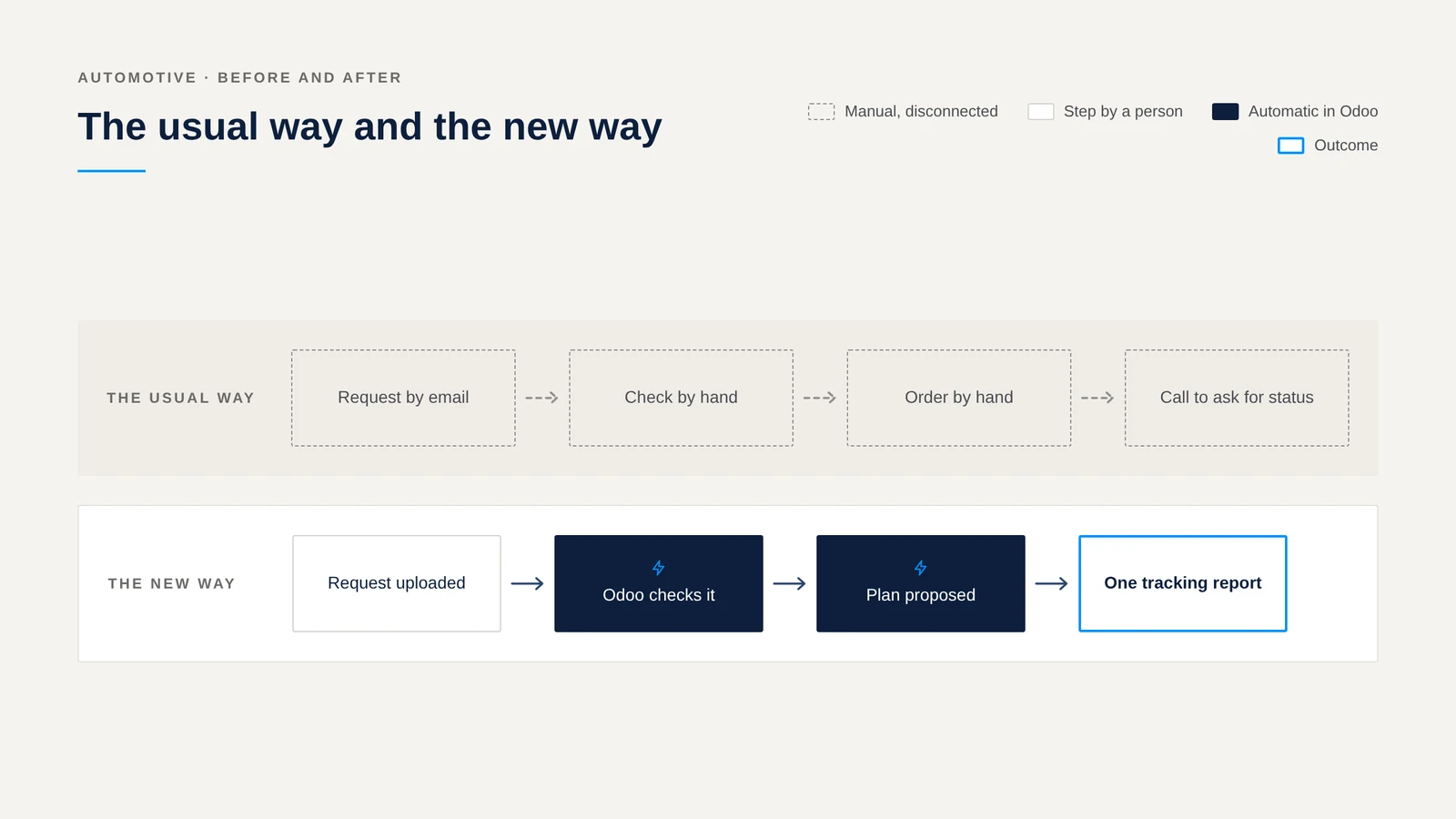
Selling a car and supplying a spare part look like the same trade, but they run very differently. One is a single high-value item tracked by its chassis number. The other is a long list of part numbers that keep changing. Autowheels, a free zone company in the United Arab Emirates, does both. Al Jawad Software House built its Odoo system around these two businesses, so each team follows its own process in one place.
The business
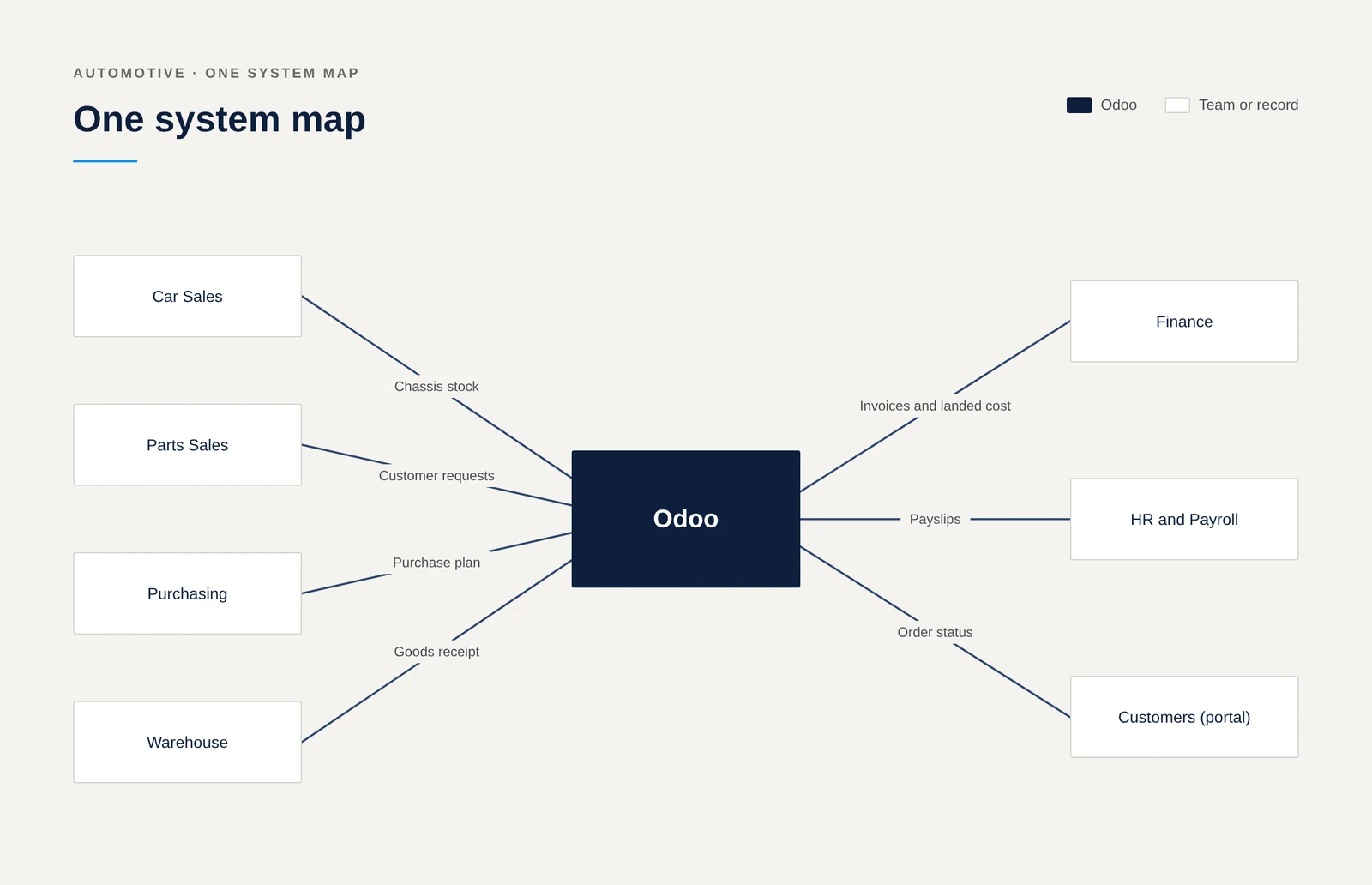
The car team buys vehicles, holds them in the free zone and sells them to customers, often across borders. The parts team takes requests from customers, orders from manufacturers and franchises, and follows every part until it arrives. Finance and HR sit behind both teams.
Where the work gets hard
A customer order can pass through many hands. A parts request may be changed by the customer, reduced by a supplier, replaced by a newer part number, and split across several shipments. The customer still wants one clear answer: where is my part?
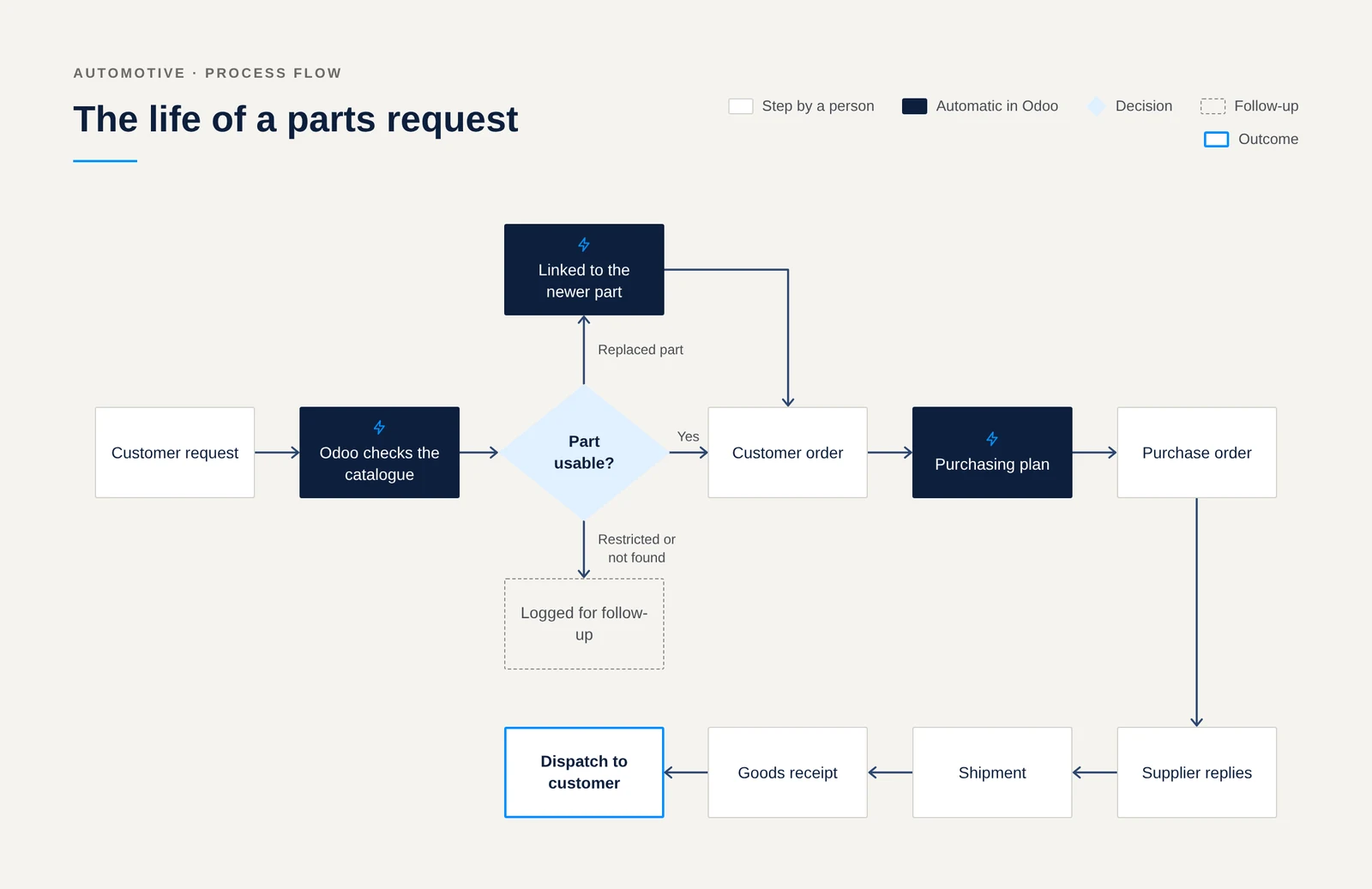
Part numbers do not stand still. Manufacturers replace parts with newer ones, which is known as supersession. Suppliers may also restrict a part for a period. A request that was correct last week may not be correct today.
Each car is one of a kind. Two cars of the same model are still two different cars. Each one has its own chassis number, cost, documents and customer, so it cannot be promised twice.
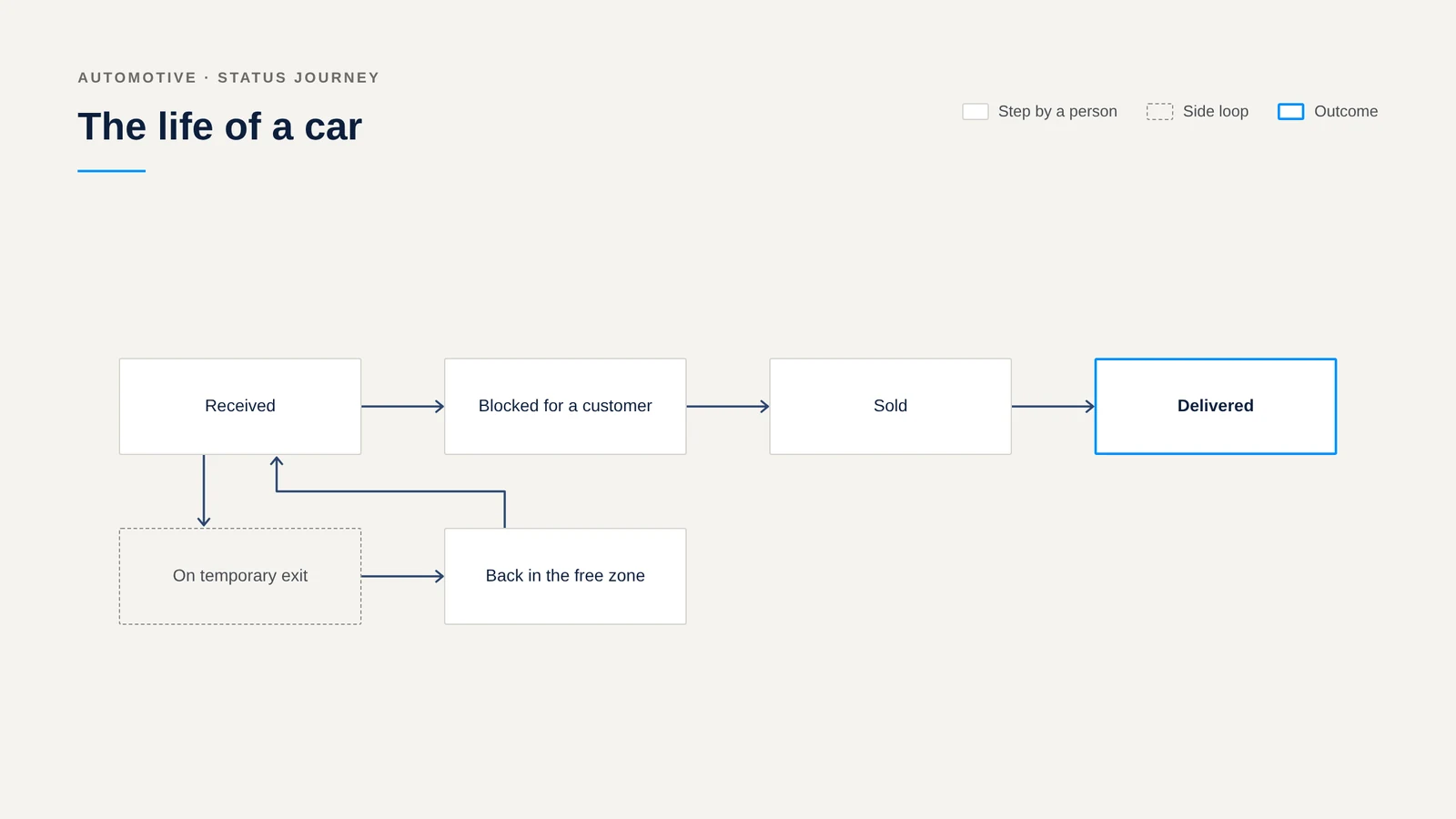
Free zone paperwork follows the car. Selling or moving a vehicle involves a set of documents, and a car can leave the free zone for a period and come back. All of this has to stay tied to the right car.
What we implemented
Parts requests that are checked on arrival
Customers can send requests through a portal or as an Excel file. Odoo checks each line against the parts catalogue, recognises parts that have been replaced, rounds quantities up to the supplier's pack size and prices them by customer. Restricted parts are dropped and recorded. If a customer sends an updated request, Odoo logs what was dropped, reduced or increased, so lost sales stay visible.
Purchase orders planned for the team
Odoo turns open customer orders into a purchasing plan. Older orders get priority, quantities are spread across the days, and orders are grouped by franchise and kept within the agreed order value. Special, spot and campaign orders can be handled apart from the daily plan.
One tracking view for every part
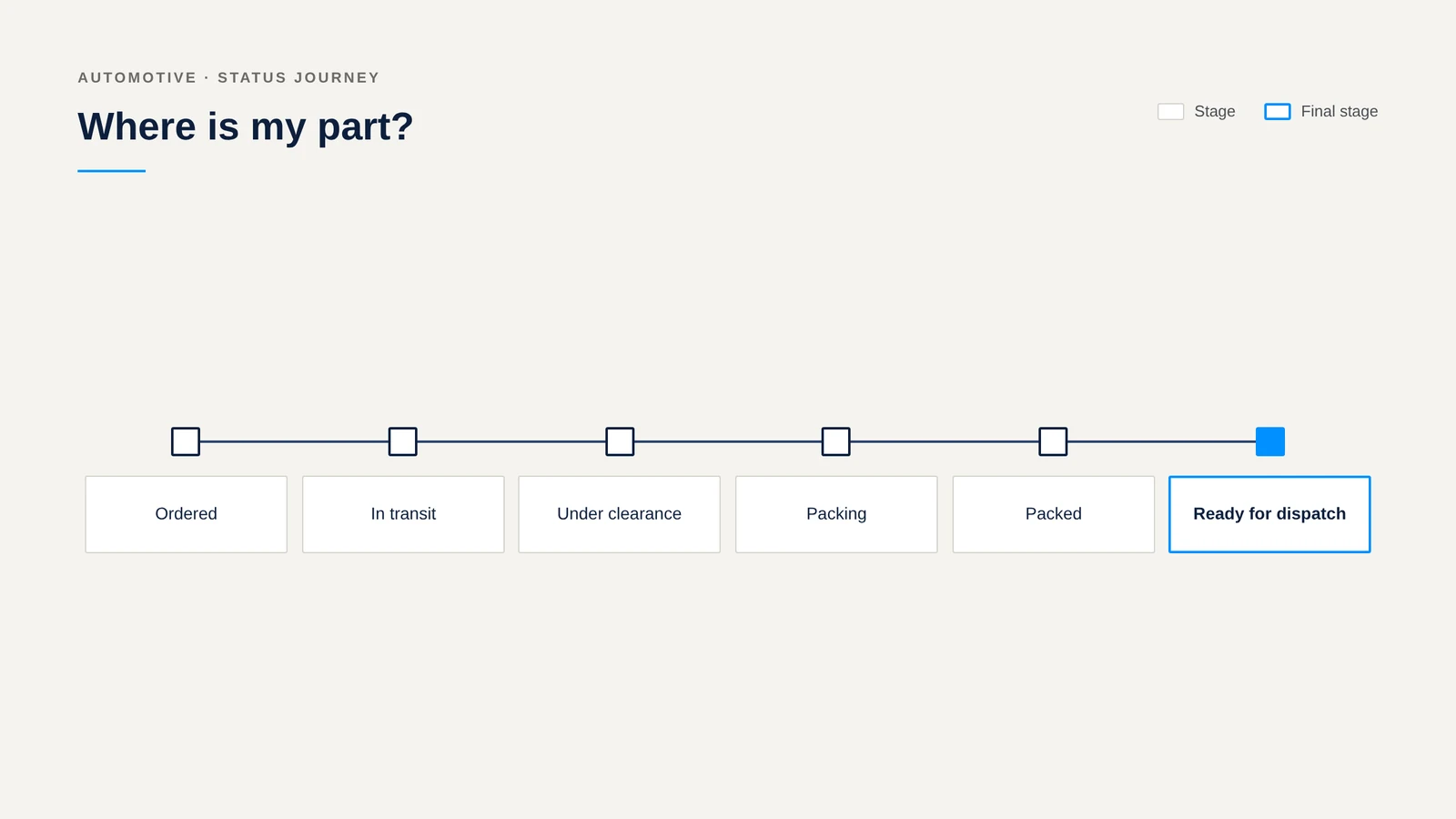
When a supplier replies, its answers are placed on the purchase order and on the customer orders behind it, including rejected quantities and replacement parts. Shipment files are then matched back to those orders, even when a newer part number arrives. Each line moves through in transit, clearance, packing and ready for dispatch. A sales order tracking report brings all of this together, and it can be filtered by customer.
Goods receipt with full landed value
Each shipment is received against its supplier invoice. Parts approve the receipt first, and a price difference needs management approval. Port, transport, customs and freight charges are added to show the real landed value of each part. Anything not on the shipment stays open for the next one.
Car sales by chassis number
Each vehicle has its own record, from arrival through blocked, sold and delivered. A chassis can sit on only one order. Quoting below the approved selling price needs approval, and changing the price again asks again. Landed costs can be entered for each chassis, and the accounting reports can be filtered by vehicle.
Free zone documents and temporary exits
Proforma invoices, commercial invoices, vehicle lists, packing lists, delivery advice and transfer of ownership documents print from the order, marked as draft until the invoice is posted. Temporary exits have their own record, and a car cannot be out on two at once. Document control follows each document's status and remarks.
A dashboard for the car team
One screen shows stock, the pipeline from quotation to delivery, purchasing, customer balances and monthly sales. Any figure opens into the list behind it. Customer statements, credit approvals and UAE HR and payroll run in the same system.
How the work gets easier
| The usual way | With the new process |
|---|---|
| Requests are checked line by line against catalogues | Odoo checks them on upload and lists only the problems |
| A replaced part breaks the link to the customer order | The new part number stays tied to the original order |
| Purchasing decides by hand what to order each day | Odoo proposes a plan, starting with the oldest orders |
| Asking where a part is means calling several people | One report follows it from request to dispatch |
| Two salespeople can promise the same car | A chassis can only be on one order |
| Vehicle documents are prepared separately | They print from the order, using the same data |
Each team spends less effort on checking and chasing, and more on customers. Management sees vehicles and parts in one system, and the numbers behind every summary are one click away.