A container of vehicles runs on a short, unforgiving calendar. Cut-off dates, shipping instructions, export filings, inspections and bills of lading each have their own owner and their own deadline. Nejoum Al Jazeera exports vehicles by ocean container, and Al Jawad Software House built its Odoo system from scratch around that calendar, so a booking, its container, its vehicles and its documents are followed in one place.
The business
Each vehicle is recorded by its VIN, the unique number that identifies it. It is assigned to a container on a loading plan, trucked to a terminal and shipped under a booking with a shipping line. Customers want to know where their vehicles are. A logistics partner needs to hear about each step. Everything depends on dates set by someone else.
Where the work gets hard
A booking changes hands many times. Each step has its own deadline and documents. A missed date can cancel a booking or lead to a penalty, so the reminder has to come before the date, not after.
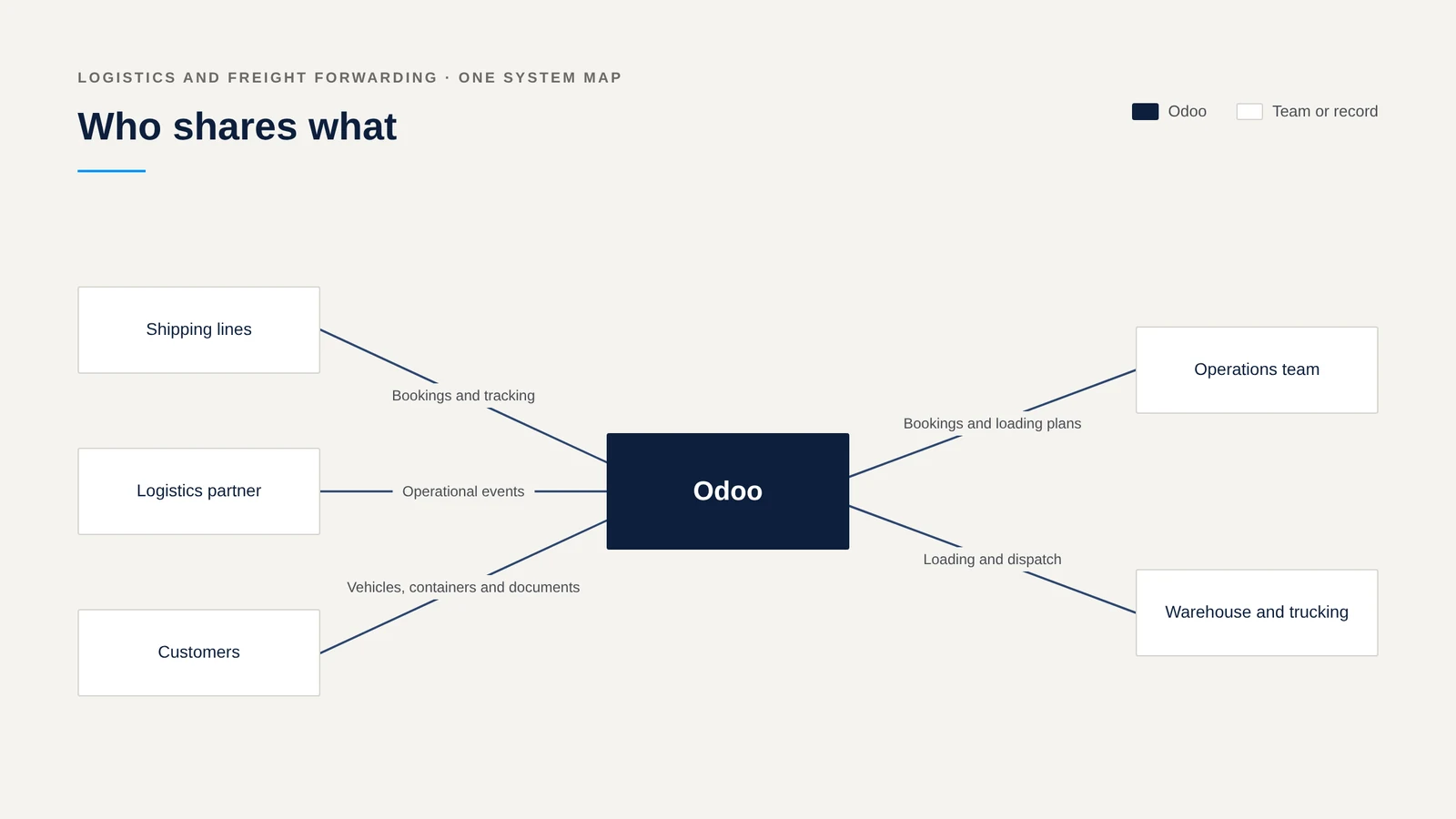
Shipping lines hold information you would otherwise retype. Bookings and tracking events start in each shipping line's own system. Without a connection, staff copy them from emails and websites.
Partners need events as they happen. A logistics partner relies on hearing about bookings, load plans, loaded containers, arrivals, titles, keys, photos and cancellations. These messages have an order, because a container cannot be reported before its load plan. The flow also has to survive an outage at either end.
Penalties need a record. Late shipping instructions, late filings and waiting charges at the port can all add up. Each charge should sit against its booking, with a way to dispute it.
What we implemented
One record for each booking
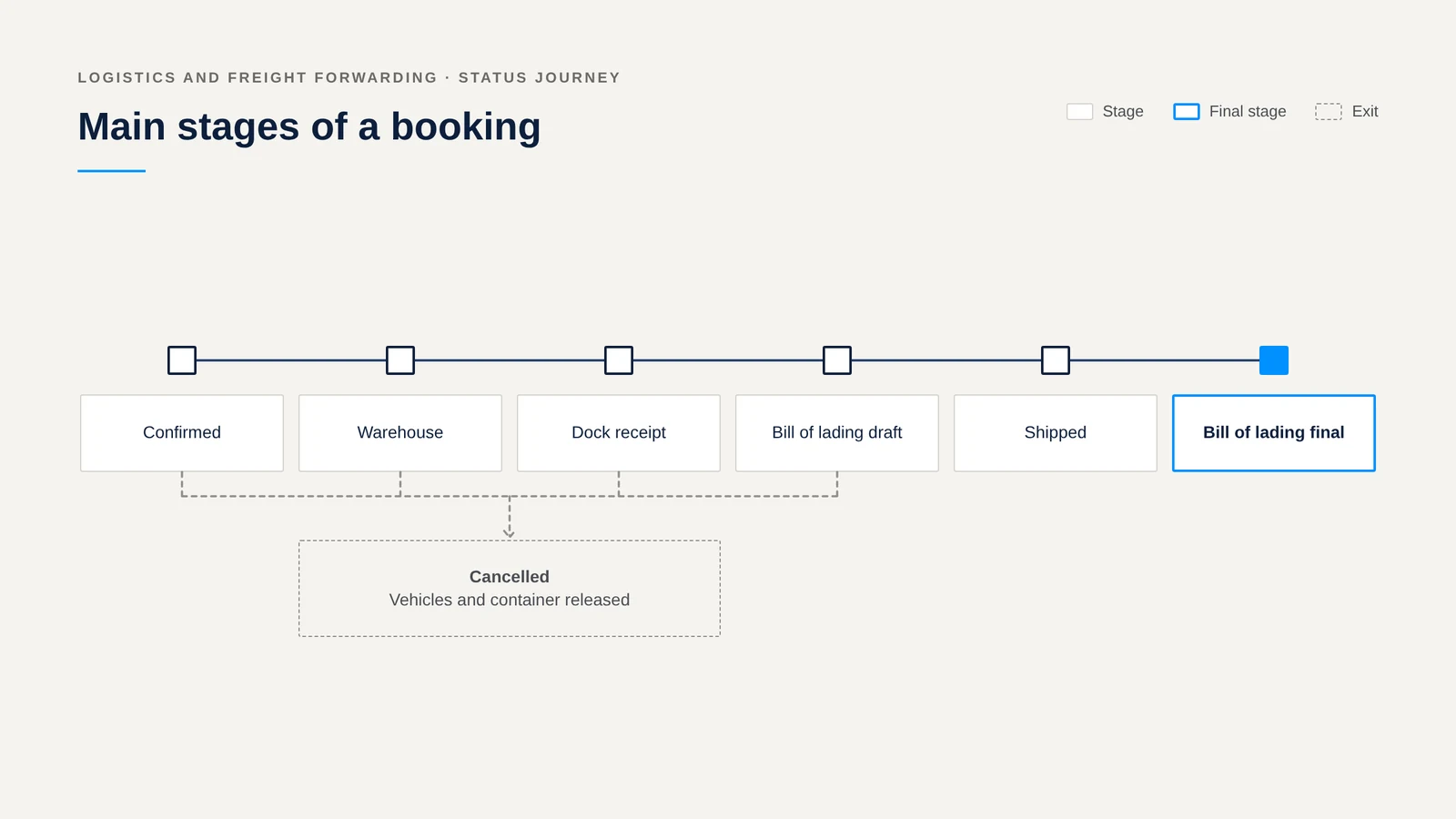
A booking has a single record in Odoo, from confirmation to the final bill of lading, the document that shows what was shipped and who may collect it. The booking can only move forward through its stages. A dock receipt, the terminal's record of what it received, is one of those stages.
Odoo watches the dates. It cancels a booking when shipping instructions expire, sends inspection reminders ahead of departure, and raises terminal cut-off alerts. Stamped documents go through their own approval, with a regular check for anything overdue. Bill of lading drafts and final releases each have approval and rejection steps. If a booking is cancelled, its vehicles and container are released for reuse.
Shipping line data in one place
Separate connections link Odoo with several shipping lines. Where a line provides booking data, Odoo creates the booking, or compares the incoming details with what it already holds and writes a summary of what changed. Tracking from each connected line arrives alongside it. A new shipping line can be added as its own connection, without rebuilding the others.
Reliable updates to the logistics partner
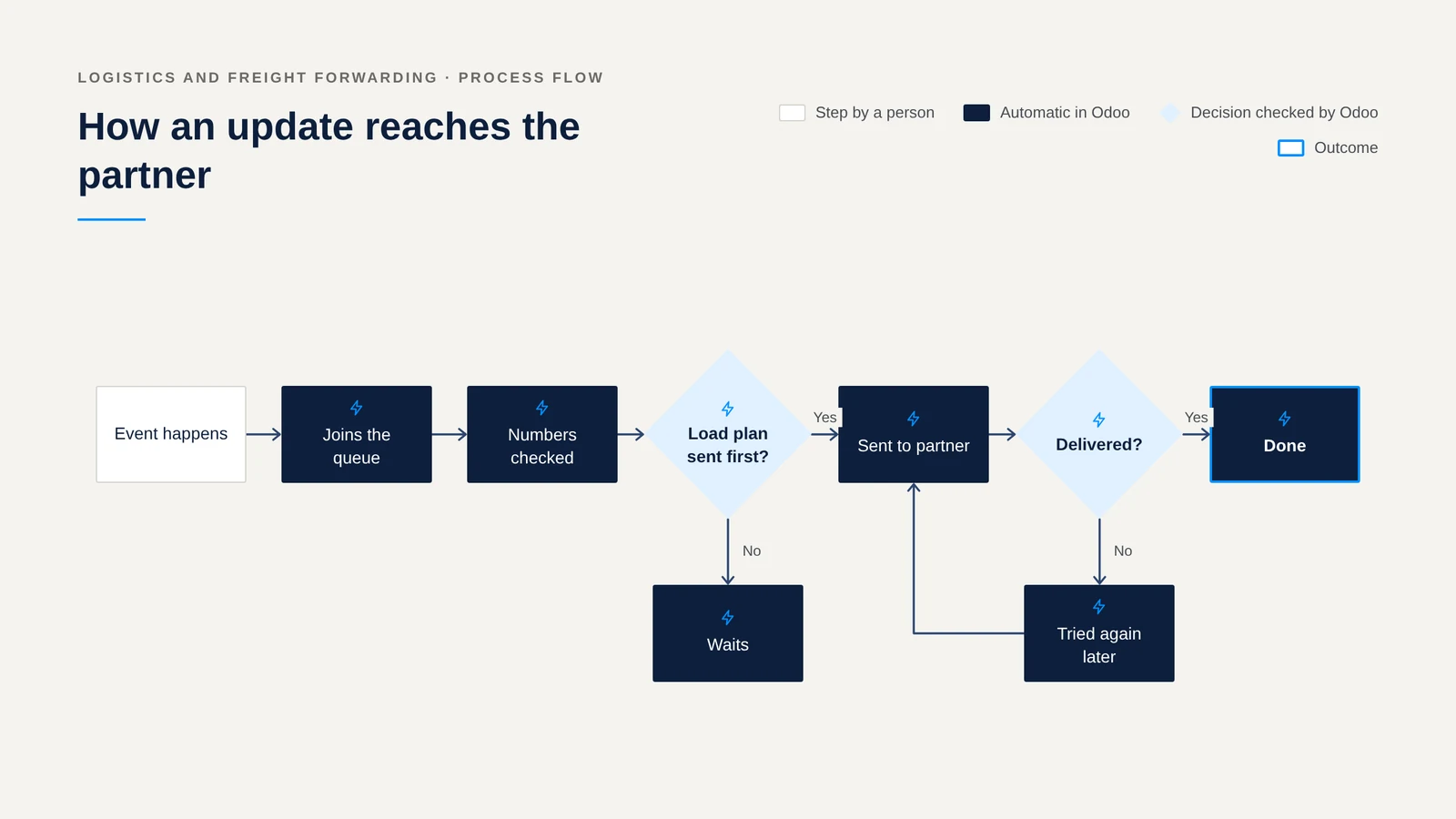
Each event joins a queue instead of being sent directly. If the partner's system is unavailable, Odoo tries again later, and staff are not left waiting. Vehicle and container numbers are checked before sending, duplicates are stopped, and a container event waits for its load plan.
Loading plans and truck dispatch
A loading plan links vehicles, a container and a booking, with hazardous-goods and hybrid flags taken into account. Truck assignments have their own record, with their own approval and a direction to or from the terminal.
Penalties with a dispute route
Penalties are tracked against the booking, and a dispute workflow gives the team a clear way to challenge a charge.
Less typing at the start
Staff can capture a VIN from a photo, or start a booking from a document, instead of keying the details. Vehicle details are decoded from the VIN and placed on the vehicle record.
A customer portal in English and Arabic
Customers sign in to follow their own vehicles and containers, and to see photos and documents, in English or Arabic.
How the work gets easier
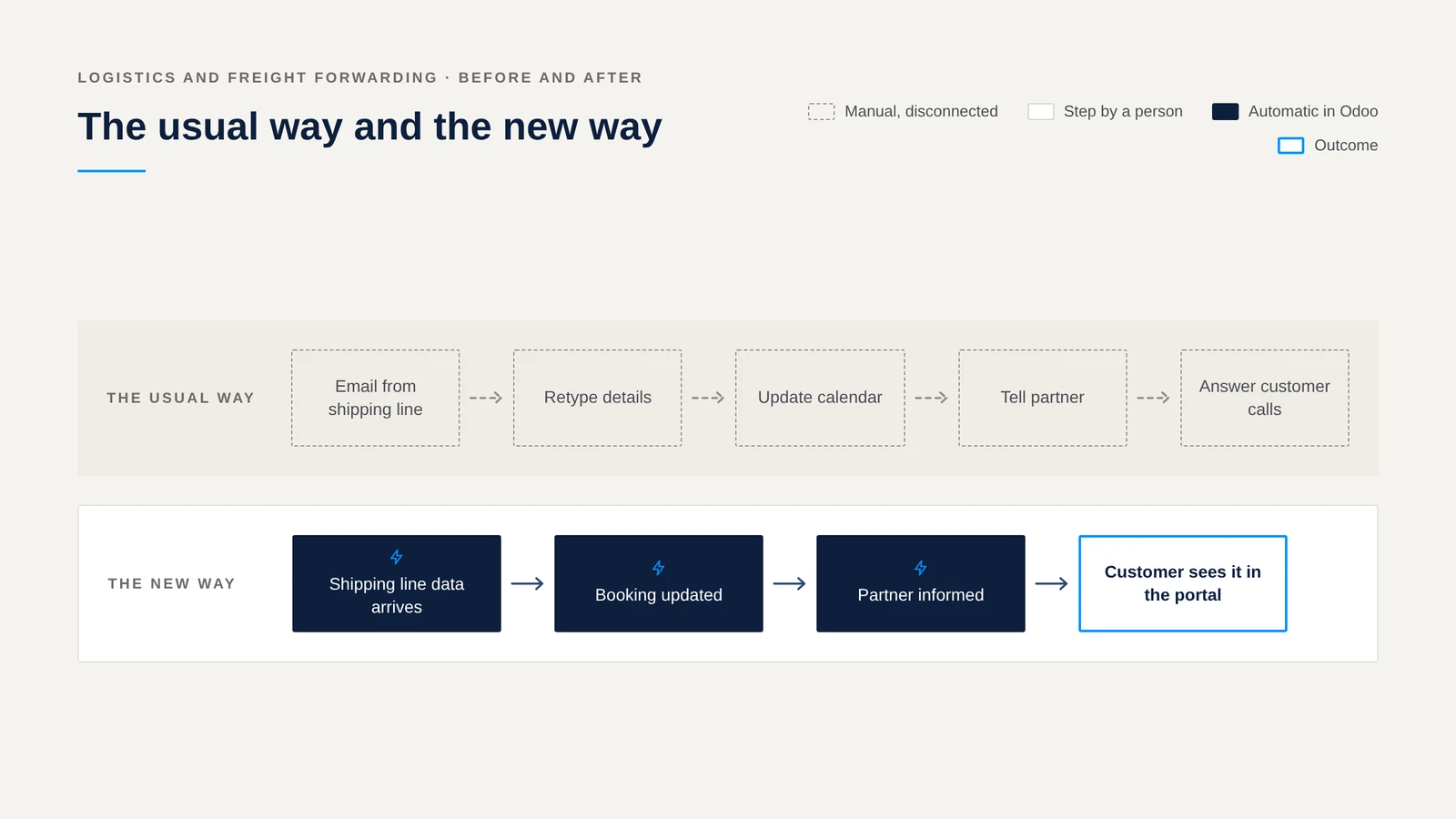
| The usual way | With the new process |
|---|---|
| Booking status lives in emails and spreadsheets | One record shows the stage, the dates and the documents |
| Someone keeps a calendar of cut-offs | Odoo sends reminders and alerts before dates pass |
| Shipping line details are retyped from websites | Data arrives in Odoo with changes summarised |
| Partner updates depend on someone sending them | Events are queued, checked and sent in order |
| Penalties surface when the invoice arrives | Each one is recorded against its booking, with a dispute route |
| Customers call to ask where a vehicle is | Customers look it up in the portal |
The result is a clearer calendar for every container, with less copying between systems. The team can spend its time on bookings that need a decision, not on hunting for dates.
Related solutions
- Odoo Integration
- Odoo Custom Development
- Business Process Automation
- Odoo for Logistics